If you tell a non-fish person that you keep Guppies, they usually laugh. “Oh, the fish that eat mosquitoes in the drain?”
But if you show them a tank full of high-grade Moscow Blue or Full Gold Guppies, they stop laughing. They usually say, “Wait, is that real gold?”
The Guppy (Poecilia reticulata) is often called a beginner fish. But I think that is misleading. Yes, they are easy to keep alive. But they are also complex enough that genetic scientists study them.
Here are my notes on the “Living Jewels” of the freshwater world.
1. The Origin: From Pest Control to Pet
Originally, these fish came from South America (Barbados, Brazil, Trinidad). In the early 1900s, the British introduced them to Malaysia and Singapore specifically to eat mosquito larvae in the drains. That is why we used to catch them for free in the longkang.
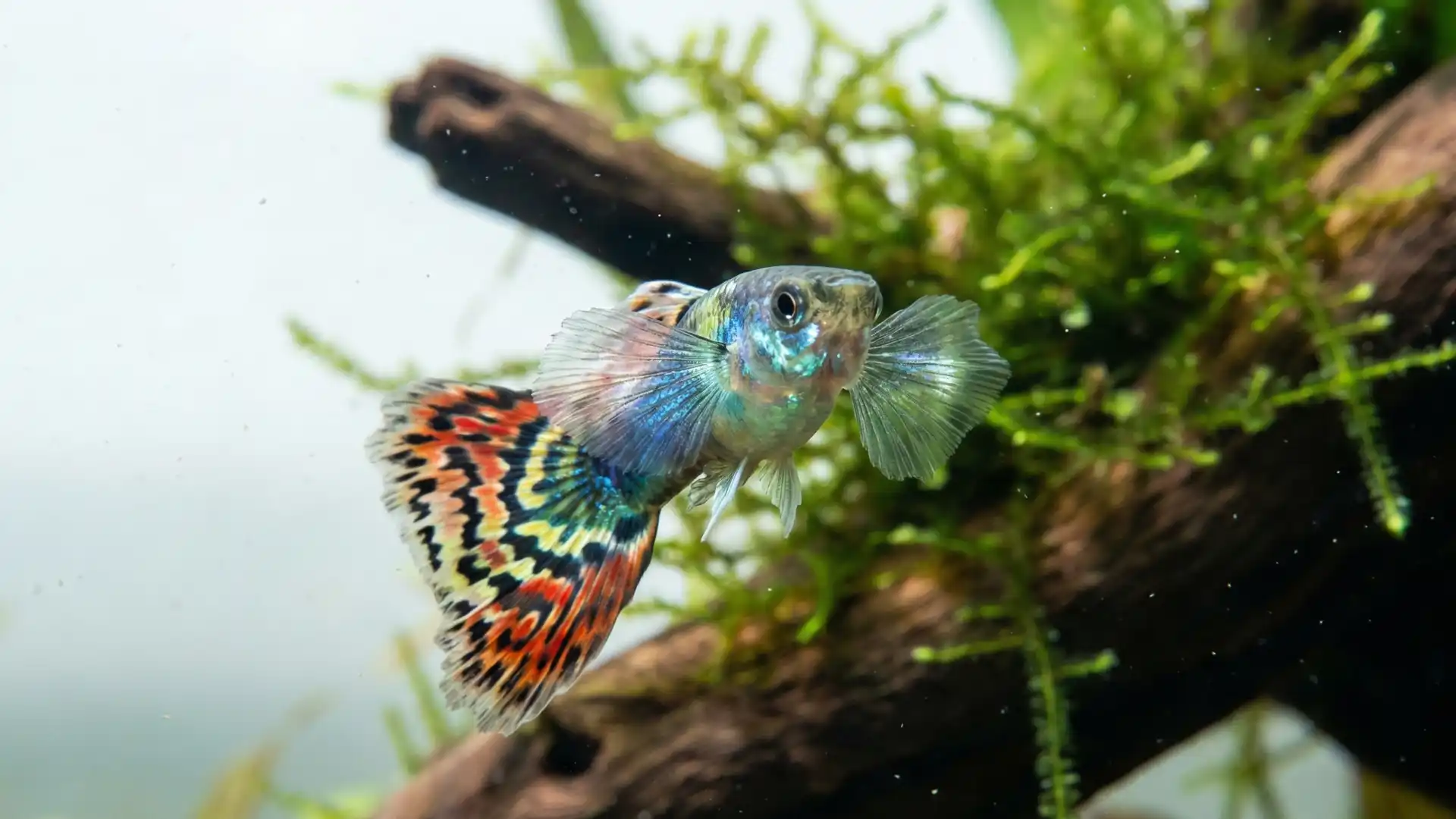
But the fish we see in shops today are very different. They have been line-bred for decades to create longer fins, brighter neon colors, and patterns that don’t exist in nature.
2. The “Millions Fish” (The Breeding Warning)
Before you buy a Guppy, you must know this nickname. They are called the Millions Fish for a reason.
- Livebearers: Unlike Goldfish or Bettas, Guppies do not lay eggs. The female gives birth to live, swimming babies (fry).
- The Speed: A female can give birth every 30 days. One female can drop 20 to 50 babies at a time.
- The Reality: I started with 3 pairs. Three months later, I had 60 fish. If you have a small tank, this is a real problem. You need a plan for the babies (or let nature take its course—the adults will often eat the fry if they can catch them).
3. Varieties: The “Art” of Genes
This is where I get addicted. It’s like collecting stamps, but the stamps are alive. There are endless combinations, but here are the terms I see most often in Malaysian shops:
- Tuxedo: The back half of the body is black (like a suit).
- Cobra / Snakeskin: The body has intricate wavy patterns.
- Mosaic: The tail has a pattern that looks like stained glass.
- Dumbo Ear (Big Ear): The side fins (pectoral fins) are huge, making them look like the elephant Dumbo.
- Endlers (Poecilia wingei): These are the Guppy’s wild cousins. They are smaller, faster, and have neon psychedelic patterns. I personally prefer these because they are healthier and live longer than the fancy types.
4. Environment: The “Hard Water” Secret
I used to struggle with fancy Guppies dying for “no reason.” Then I learned about water hardness.
- pH: Guppies love Hard Water with a high pH (7.0 – 8.0).
- The Mistake: In some parts of Malaysia, our rainwater or tap water can be soft/acidic. If the pH drops too low (acidic), Guppies get sick. Their fins clamp shut, and they get “the shimmies” (shaking).
- The Fix: I always keep crushed coral or seashells in my filter to keep the mineral content high. They need calcium for their bones and fins.
5. Behavior: The Hyperactive Puppy
Guppies never sleep. Or at least, I never catch them sleeping.
- The Wiggle: They are constantly swimming, wiggling, and picking at algae.
- The Males: The males spend 99% of their life chasing females. It can be stressful for the girls.
- My Ratio Rule: I always try to keep 1 Male for every 2 or 3 Females. This spreads out the harassment so one female doesn’t get exhausted running away.
6. Diet
They are the easiest fish to feed. They are omnivores.
- Dry Food: Any high-quality micro-pellet or flake.
- Live Food: They go crazy for Baby Brine Shrimp (BBS). If you want your babies to grow fast and have bright colors, BBS is the secret weapon.
The Guppy is the perfect fish for an introvert’s desk. They are small, they are silent, and watching their tails flowing in the current is like watching a campfire. It’s mesmerizing. Just be prepared to become a “grandparent” very, very quickly.