Tourists come to Penang for two reasons: Char Koay Teow and Asam Laksa.
But if you ask a serious fish hobbyist from Germany, USA, or Japan why they are flying to Penang, the answer is different. They are here to buy Discus.
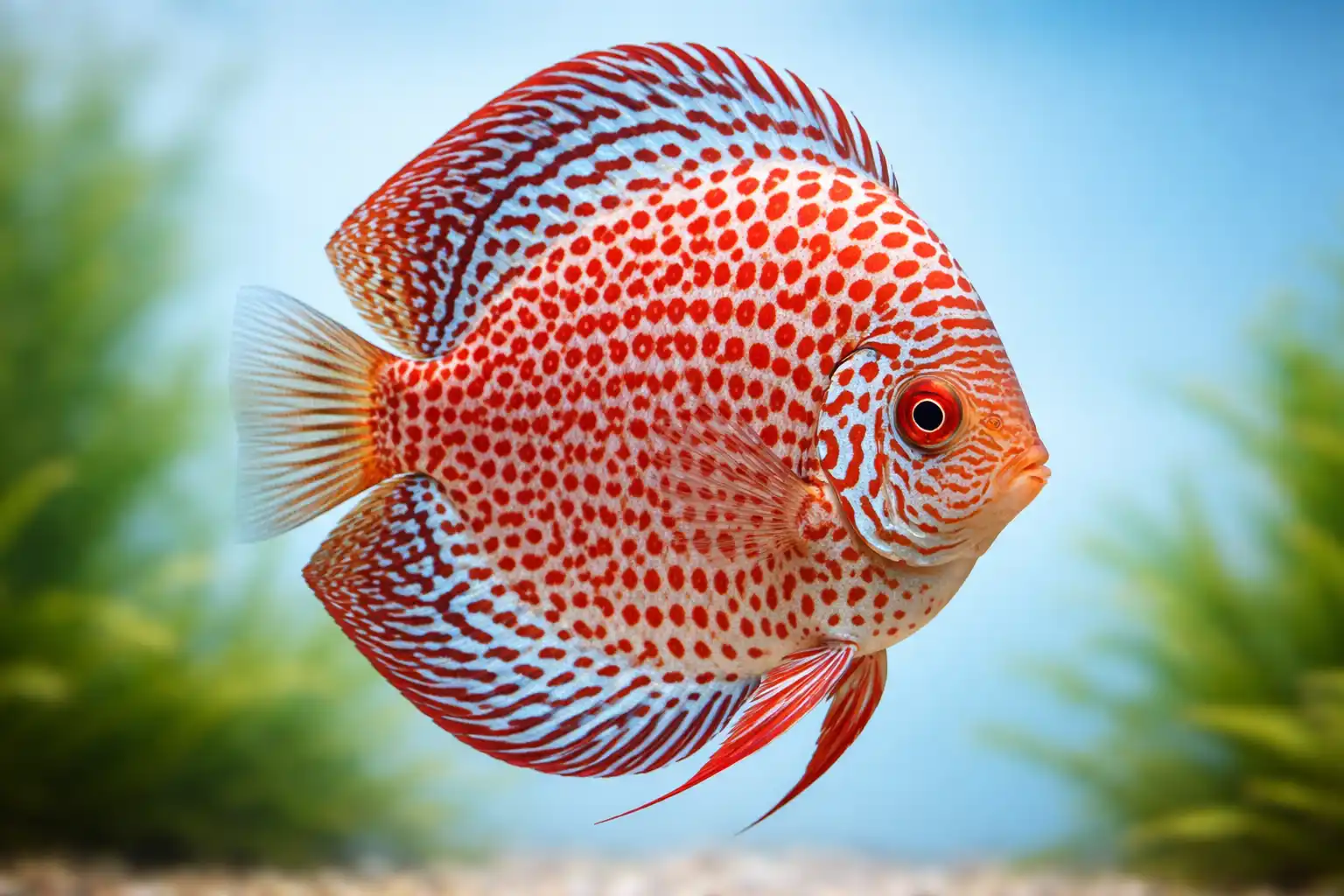
For decades, Penang has been the global capital of Discus breeding. The strains developed here—like the “Penang Eruption,” “Leopard Snake,” and “Checkerboard”—set the standard for the entire world.
Known as the “King of the Aquarium,” the Discus (Symphysodon) is undeniably the most beautiful freshwater fish you can own. But it is also the biggest diva.
Here is the story of our local legend, and the honest truth about keeping them in a home aquarium.
1. Why Penang?
Why did a small island in Malaysia become the Discus capital? It comes down to two things: Water and Dedication.
- The Magic Water: Discus originate from the Amazon River, where the water is incredibly soft and acidic. Penang tap water happens to be naturally soft and slightly acidic. It is “liquid gold” for breeding Discus.
- The Breeders: In the 80s and 90s, Penang breeders didn’t just breed fish; they engineered art. They selectively bred brown wild fish into the neon blue, solid red, and spotted patterns we see today.
2. The “King” is a Diva (The Difficulty)
If you treat a Discus like a Goldfish, it will die. If you treat it like a Guppy, it will die.
Discus are famous for being sensitive. They demand perfection.
- The Water Change Regime: In Penang fish farms, breeders change 100% of the water every single day. In a home aquarium, you can’t easily do that. But you still need to change 30-50% water twice a week. If the water gets dirty (high nitrates), Discus turn dark, stop eating, and get sick.
- The Temperature: They like it hot. Really hot. 28°C – 31°C. This is actually perfect for Malaysian weather (we don’t need heaters!), but it limits what other plants or fish you can keep with them.
3. The “Peppering” Problem
This is a specific tip for beginners. You might see a bright orange “Pigeon Blood” Discus in the shop. You take it home, put it in a tank with black background and dark soil.
A week later, your fish looks dirty. It is covered in black specks. This is called “Peppering.”
Discus change color to match their environment. If the tank is dark, they try to darken up to hide. To keep their colors bright and clean, Discus tanks usually need light sand and a light background.
4. Diet: The Beefheart Tradition
In the wild, they eat insects. In Penang, we feed them Beefheart.
Most serious keepers make their own mix of minced beef heart, shrimp, and vitamins. It makes the fish grow huge and round.
- The Downside: Beefheart fouls the water incredibly fast. This brings us back to point #2: You need massive water changes.
5. The “Schooling” Cost
You cannot buy one Discus. They are social animals. If kept alone, they get depressed, hide, and waste away.
- The Rule: You need a minimum of 5 or 6 adults to spread out aggression.
- The Cost: A nice 3-inch Discus can cost RM80 – RM150. A school of 6 plus a large 4-foot tank is a serious financial commitment.
The Penang Discus is the Ferrari of the aquarium hobby. It is stunning, fast, and high-maintenance.
If you are a beginner, look at them in the shop. Admire them. Be proud that they are “Made in Malaysia.” But do not buy them until you are ready to become a water-change robot. The King demands a loyal servant.