A calm path from curiosity to confident keeper
This roadmap is designed for people who:
- feel drawn to Channa
- but are overwhelmed by warnings, horror stories, and macho advice
- want to do things properly, not aggressively
STAGE 0 — Before You Buy Anything
Mindset First
Goal: Decide if Channa is really for you.
You must accept:
- Most Channa are solo fish
- They are jumpers
- They are interactive, not decorative
- Mistakes cost lives, not just money
👉 If you want a peaceful community tank, stop here.
👉 If you want a single intelligent predator, continue.
Read first:
- Why Channa Are Not Normal Fish (air-breather reality)
STAGE 1 — Choosing the Right First Channa
Avoid the Monster Trap
Beginner-friendly choices:
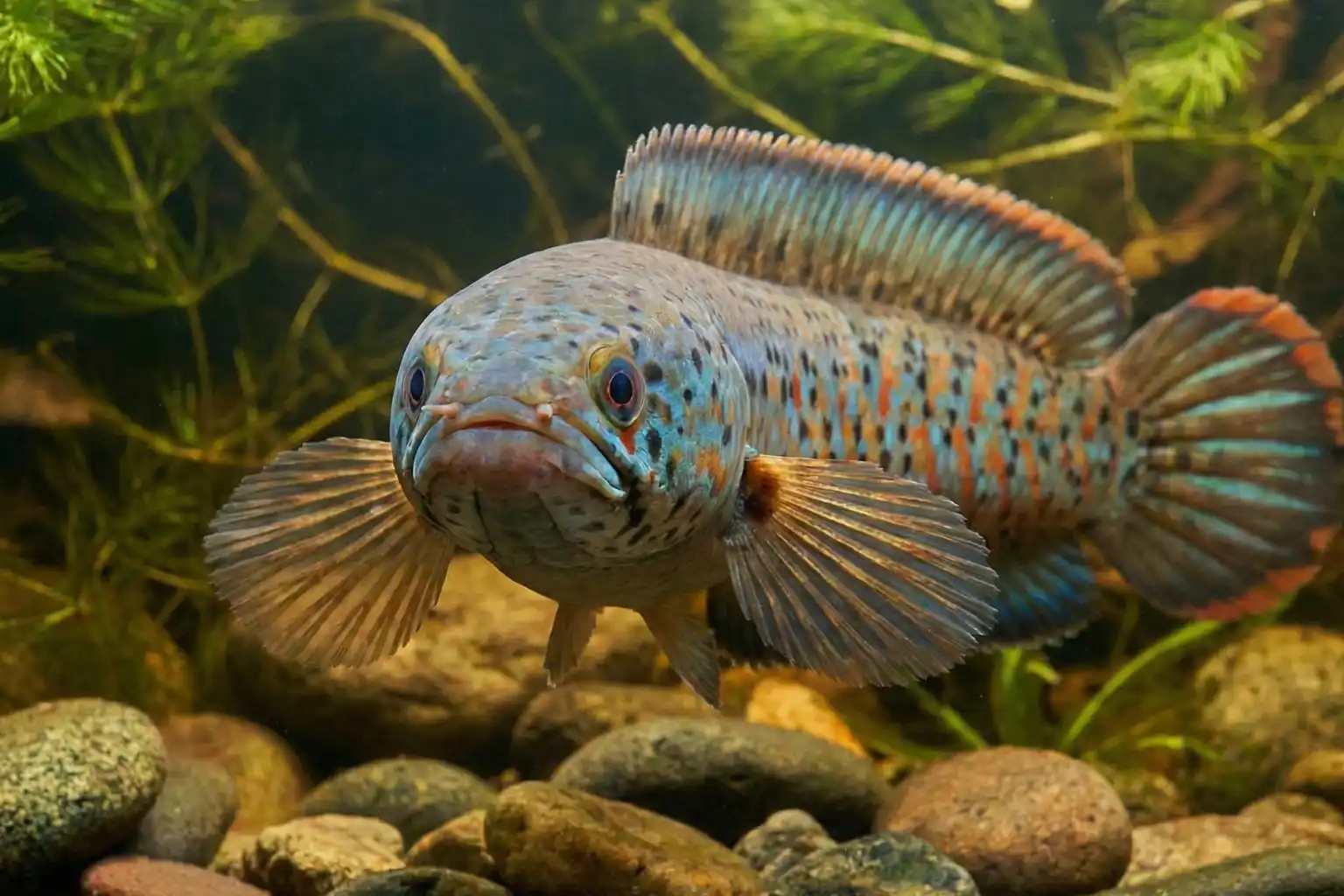
- Channa Andrao
- Channa Bleheri
- Other dwarf species (10–15 cm adult size)
Avoid as a beginner:
- Giant Toman
- Highly aggressive large species
- “Cheap but huge later” fish
Rule:
Buy for adult size, not current size.
Key lesson:
A small Channa is not a baby — it’s a promise.
STAGE 2 — Tank Setup (The Non-Negotiables)
Goal: Create a safe, breathable territory.
Tank
- Minimum: 2–3 feet (depending on species)
- Wider is better than taller
Lid (MOST IMPORTANT)
- Escape-proof
- Not airtight
- Mesh lid > glass lid
Surface Access
- Clear surface
- No full plastic covers
- No floating junk blocking air
Layout
- Sand substrate
- Driftwood (territory marker)
- One solid cave
- Open swimming lane
Read next:
- The Air-Breather Reality
- (Later) Why Channa Jump
STAGE 3 — The First 30 Days
Observation > Interaction
What to do:
- Minimal feeding
- No tank mates
- Watch behavior, not parameters
- Let the fish “claim” the tank
Normal behavior:
- Hiding
- Slow hovering
- Watching you from cover
Red flags:
- Constant frantic surfacing
- Banging into glass
- Jump attempts at feeding time
Rule:
A calm Channa is a healthy Channa.
STAGE 4 — Feeding Without Creating a Monster
Goal: Build trust, not aggression.
Best approach:
- High-quality pellets
- Occasional live or frozen food
- Consistent feeding spot
Avoid:
- Feeding only live fish
- Overfeeding “for growth”
- Teasing jumps too early
Why:
Overstimulated Channa become reckless jumpers.
STAGE 5 — Understanding Personality
This Is Where Addiction Starts
Learn to read:
- Eye tracking
- Body posture
- Hover height
- Reaction to movement
This is when Channa stop feeling like fish and start feeling like pets.
Read next:
- Why Channa Owners Talk to Their Fish
- (Later) Reading Channa Body Language
STAGE 6 — Tank Mates (Optional, High Risk)
Default answer: No tank mates.
Possible exceptions:
- Large armored Plecos
- Bottom-dwelling fish with armor
Rules:
- Tank mate goes in first
- Have a spare tank ready
- 48-hour observation window
Truth:
A solo Channa is a happy Channa.
STAGE 7 — Long-Term Keeping
Stability Over Perfection
- Regular but simple maintenance
- Stable environment
- No constant rescapes or redecoration
- Respect its territory
At this stage, your Channa:
- Recognizes you
- Responds to movement
- Feels like a companion
STAGE 8 — Advanced Paths (Choose One)
Path A: The Observer
- Single fish
- Long lifespan
- Minimal stress
- Maximum personality
Path B: The Groomer
- Buy juveniles
- Develop color & pattern
- Accept genetic gambling
Path C: The Species Nerd
- One species per tank
- Behavior comparison
- Deep knowledge
Final Rule of the Roadmap
Channa reward patience.
They punish shortcuts.
If you follow this roadmap, you won’t just keep a Channa —
you’ll understand one.