Introduction
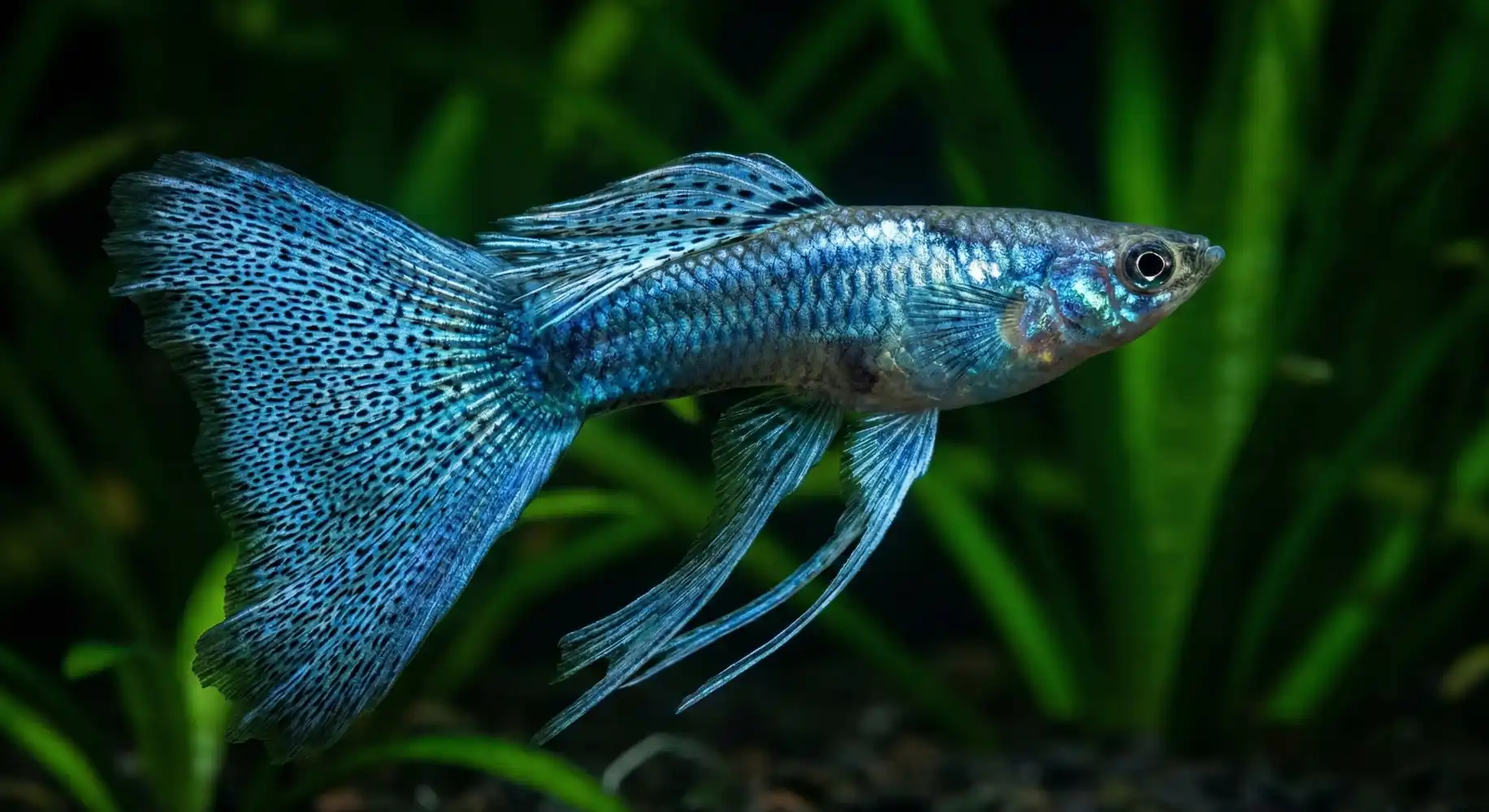
Guppy fish (Poecilia reticulata), also called rainbow fish or millionfish, are small, vibrant live‑bearing freshwater fish native to the streams and pools of northern South America and the Caribbean. They have been bred since the late 19th century and now exist in hundreds of strains with almost every color and fin shape imaginable. Guppies are popular in aquariums because they are hardy, easy to care for and breed, and display striking tail shapes and colors. Males are generally smaller (0.6–1.4 in) and more colorful, whereas females are larger (1.2–2.4 in) and less vivid. Their typical lifespan is 2–3 years, though well‑cared individuals can live longer.
Types of Guppy Fish
Guppy varieties are usually classified by tail shape or color/pattern. Major tail types include:
|
Tail type |
Description & notes |
|
Fantail |
Fan‑shaped tail; also called fancy or fan‑tailed guppy. |
|
Veiltail |
Longer, flowing tail; similar to a fantail but more elongated. |
|
Delta tail |
Large triangular tail resembling the Greek letter Δ; a common tail type. |
|
Flagtail/scarf tail |
Rectangular “flag‑like” tail that may extend behind the body. |
|
Swordtail (top/bottom/double) |
Tail has one or two sword‑like extensions; double swordtails have both dorsal and ventral “swords”. |
|
Lyretail |
Both upper and lower edges of the tail extend and curve, producing a lyre‑shaped fin. |
Breeders also distinguish strains by body coloration and pattern. Examples include mosaic guppies (spotted, multicolored tails), leopard guppies (tails with leopard‑like spots), panda guppies (dark blue/black with silvery contrast), koi guppies (red‑and‑white patterns resembling koi carp), cobra or snakeskin guppies (heavy spotting reminiscent of snakeskin), glass guppies (translucent bodies), dumbo ear guppies (extra‑large pectoral fins) and lyretail guppies. Selective breeding produces unusual color combinations such as solid white or platinum guppies, albino strains with red eyes and multi‑colored varieties.
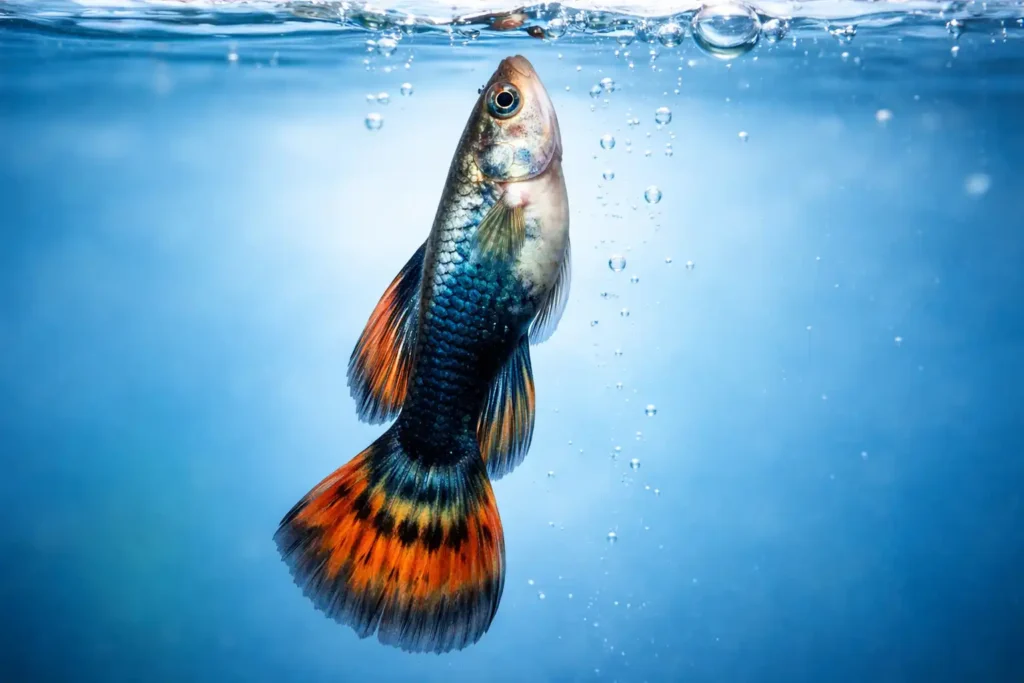
The photo below shows six guppy breeds (clockwise from top right: ribbon mosaic RREA, mosaic chilli, double sword, orange pintail, Moscow red RREA and cobra snakeskin).
Size & Lifespan
Guppies are small fish. Adults typically reach 2 inches (5 cm) in length. Males are smaller (0.6–1.4 in), while females measure 1.2–2.4 in and appear plumper. Their average lifespan is 2–3 years, though they may live up to 5 years under ideal conditions. Because they are short‑lived and mature quickly (males mature by ~7 weeks and females by 10–20 weeks), guppies breed rapidly.
Colors & Patterns
Guppies come in almost every color: white, black, blue, green, orange, red, yellow, purple, bronze, platinum and gold. Body patterns may be solid, half‑and‑half, leopard, snakeskin, mosaic or lace. Males are more vividly colored than females and have longer dorsal and caudal fins. Selective breeding has produced albino (pale body, red eyes), glass (translucent) and panda varieties.
Diet & Food
Guppies are omnivores. Wild fish graze on algae, plant particles, insect larvae and small crustaceans. In aquariums, offer a varied diet of micro pellets, high‑quality flakes, frozen or freeze‑dried foods (e.g., bloodworms, brine shrimp) and occasional vegetables. Feed adults once or twice per day, providing only as much as they can consume within 1–2 minutes. Fry (baby guppies) require more frequent but tiny feedings—up to 3–5 times daily. Variety is essential to prevent nutritional deficiencies and to enhance coloration.
Breeding & Reproduction
Guppies are live‑bearers—they give birth to fully formed fry rather than laying eggs. Females are capable of storing sperm for multiple broods and can become pregnant about once a month. Gestation lasts approximately 21–31 days, and each brood typically produces 20–50 fry (with extremes from 1 to 100). Pregnant females develop a dark “gravid spot” near the anal fin that darkens as the pregnancy progresses. Because adults may eat their own fry, breeders often separate pregnant females or provide dense plants for hiding.
Guppies reach sexual maturity quickly—males by ~7 weeks and females by 10–20 weeks—and can continue producing fry until around 20–34 months of age. To avoid an over‑populated tank, keep more females than males (2–3 females per male) and separate sexes when breeding is not desired.
Tank Setup & Water Parameters
Guppies need clean, stable water and adequate space. Key recommendations:
|
Parameter / Item |
Recommended range |
Notes |
|
Minimum tank size |
5+ gallons (for a trio); increase by ~2 gallons per additional fish |
More space is better; guppies are active swimmers. |
|
Stocking density |
~1 gallon per inch of fish |
E.g., a 10‑gallon tank comfortably houses ~5 guppies. |
|
Water temperature |
72–82 °F (22–28 °C) |
Use a heater to maintain stable temperatures; higher temps accelerate growth but shorten lifespan. |
|
pH |
6.8–7.8 |
Slightly alkaline water preferred; guppies thrive in hard water rich in minerals. |
|
Hardness |
6–8 °dH (100–150 mg/L CaCO₃) |
Add mineral supplements if tap water is soft. |
|
Filtration |
Filter should circulate entire tank volume ≥4 times per hour; hang‑on‑back or canister filters are effective |
Sponge filters are gentle and protect fry from being sucked in. |
|
Substrate |
1–2 in of sand or gravel; ~1½ lb per gallon |
Rinse substrate before adding. |
|
Plants & decor |
Provide live or artificial plants (e.g., guppy grass, java moss, duckweed) and hiding spots |
Plants offer cover for fry and supplement diet. |
|
Water changes |
Replace 10–25% of water every 2–4 weeks |
Avoid full water changes to preserve beneficial bacteria. |
|
Lid/hood |
Secure lid to prevent guppies from jumping (they can leap up to seven times their body length) |
|
Equipment & Supplies
A well‑equipped guppy tank ensures healthy fish. According to the PetMD care sheet, essential supplies include an appropriate‑sized aquarium, food, decorations, water conditioner, filter, water test kit, full‑spectrum lighting, net, thermometer, substrate, heater, airline tubing, air pump, check valve, refractometer (if using salt), freshwater salt (some species benefit from low salinity), live plants and a secure hood. When selecting a heater, plan for 2.5–5 watts per gallon—a 10‑gallon tank requires a 25‑ to 50‑watt heater. Larger tanks may need two heaters placed on opposite sides to prevent cold spots.
Ensure the filter is rated to process the tank’s volume at least four times per hour. Regularly test water parameters (pH, ammonia, nitrite, nitrate and hardness) using a water test kit. Keep a thermometer in the aquarium and maintain stable temperatures. Use live plants like java moss or guppy grass to provide shelter for fry and help maintain water quality. Avoid housing guppies with large or aggressive fish such as goldfish (goldfish prefer cooler water and may eat guppies).
Breeding, Health & Care Tips
- Breeding Setup – If you plan to breed guppies, use a separate breeding tank or breeding box. Provide dense plants such as java moss for fry hiding. Maintain slightly warmer temperatures (78–82 °F) to encourage reproduction, but remember that higher temperatures shorten lifespan. Separate pregnant females before birth and return them after they give birth to prevent them from eating fry.
- Controlling Population – Keep more females than males and separate sexes when you don’t want fry. Females can store sperm for up to 10 months, so separation may not immediately stop reproduction.
- Health Monitoring – Look for bright coloration, active swimming and intact fins. Signs of illness include bulging eyes, lethargy, white spots (ich), fin rot, bloating or abnormal swimming. Maintain good water quality and varied diet to reduce stress.
- Water Care – Test water weekly when establishing a new tank and monthly thereafter. Use water conditioner to remove chlorine and metals before adding water. Avoid replacing all filter media at once to preserve beneficial bacteria.
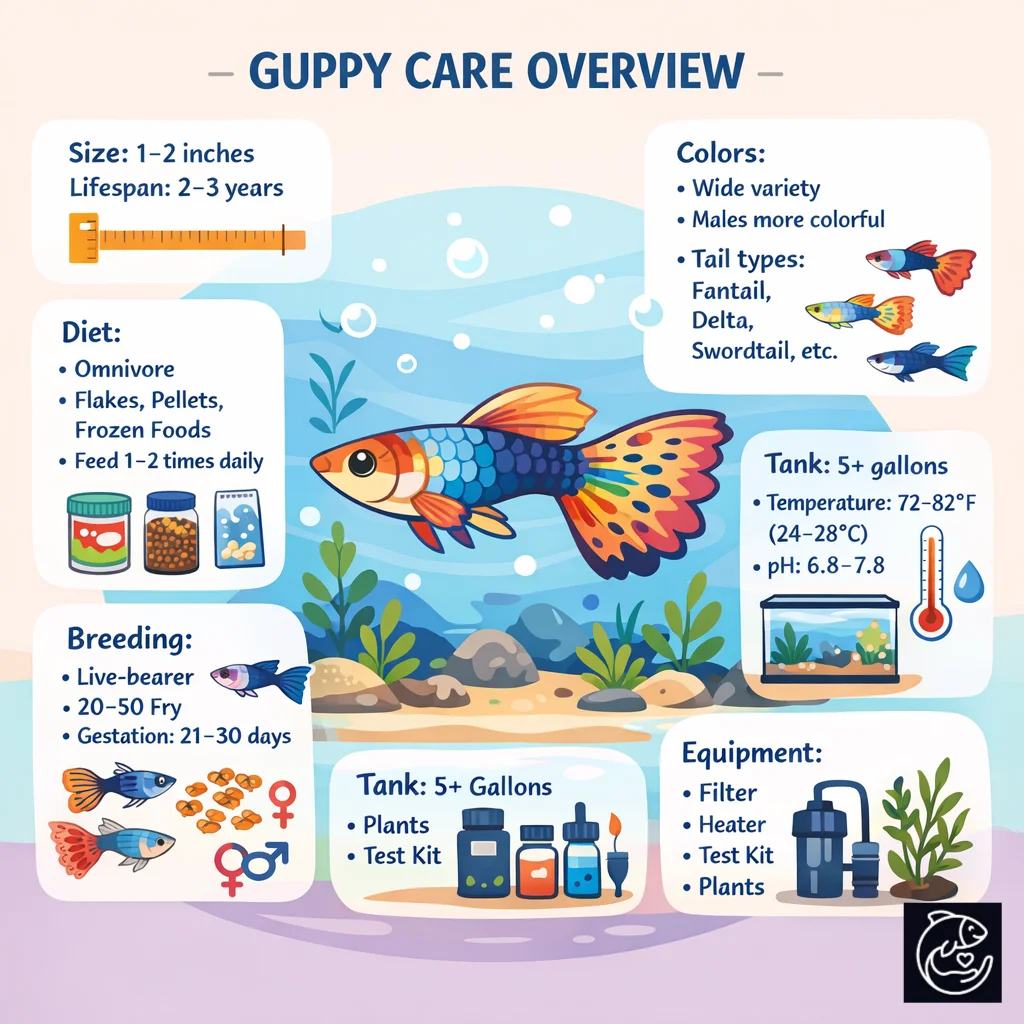
Guppy Care Infographic
Below is an infographic summarizing the key aspects of guppy care, including size and lifespan, tank requirements, diet, breeding, equipment and color/type diversity:
Summary
Guppies are colourful, beginner‑friendly aquarium fish that thrive in well‑maintained, planted tanks with stable water conditions. Adults reach roughly 2 inches and live 2–3 years, though they may live longer with proper care. Males are smaller and more vibrantly colored; females are larger and less showy. A single pair can quickly populate a tank because females store sperm and give birth every 3–4 weeks, producing 20–50 fry at a time. To prevent overpopulation, maintain a ratio of two or three females per male and separate sexes if breeding is not desired.
Providing a spacious tank (≥5 gallons for three fish), clean water (pH 6.8–7.8, hardness 6–8 °dH), appropriate filtration and a heater ensures healthy fish. Live plants, hiding places and a secure lid are essential, as guppies are jumpers and fry need cover. Feed them a varied omnivorous diet once or twice daily and perform regular partial water changes. With proper care, guppies provide a dazzling display of colours and continuous activity in the home aquarium.