In my previous note, I introduced the Channa family. But if you hang out in Malaysian fish groups long enough, you will realize that owning a Channa is just the start.
There is a whole science (and art) behind keeping them. People don’t just “keep” Channa; they “groom” them. They treat them like bonsai trees, trying to coax out specific colors and patterns.
Here are my deeper notes on the behaviors and sub-groups of this fascinating family.
1. The “Bunga” (Flower) Obsession
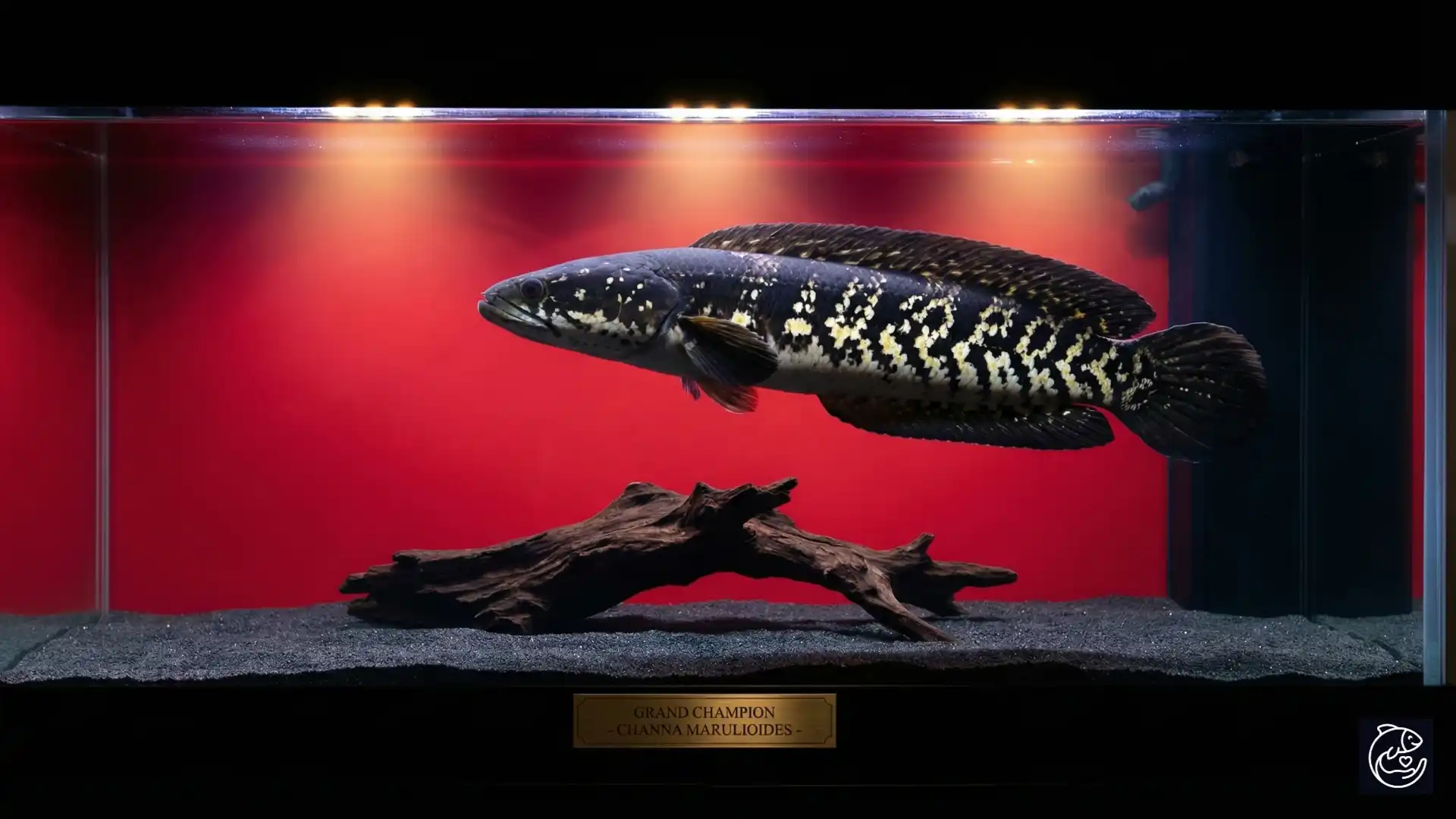
In Malaysia and Indonesia, the Channa marulioides (Channa Maru) is King. Why? Because of the “Flowers.”
- What is it? The white/yellow distinct spots on the side of the fish’s body are called flowers (bunga).
- The Goal: A “Grade A” Maru has flowers that are large, solid (not hollow), and numerous. Serious collectors want flowers that reach all the way to the dorsal fin.
- The “Grooming” Secret: I learned that owners use specific techniques to encourage these flowers.
- Indoor vs. Outdoor: Some swear by sunlight to pop the yellow colors.
- Tank Background: Most Maru keepers use a Red Background or sometimes White, believing it triggers the fish to lighten its color and show more flowers.
- Diet: Feeding live frogs or high-protein insects is often linked to faster growth and flower development.
2. Pelagic vs. Benthic (The Behavior Difference)
This was a “lightbulb moment” for me. Not all Channa behave the same. Scientists (and hobbyists) divide them into two groups based on where they swim.
- Pelagic Channa (The Swimmers):
- Examples: Toman (C. micropeltes), Maru (C. marulioides).
- Behavior: They spend most of their time swimming in the middle or top of the water column. They are active hunters.
- Tank Setup: They need lots of open swimming space. Don’t clutter the tank with too much wood; they need room to patrol.
- Benthic Channa (The Cave Dwellers):
- Examples: Channa Barca, Channa Auranti, Channa Andrao.
- Behavior: They spend most of their time resting on the bottom substrate or hiding in caves. They are ambush predators. They sit and wait.
- Tank Setup: They get stressed in empty tanks. They need sand to dig in, caves to hide in, and driftwood to rest under.
3. The “Sub-Tropical” Trap
I touched on this before, but I need to emphasize it because it kills so many fish in Malaysia.
Many of the most colorful Channa (Blue Bleheri, Andrao, Barca) come from the foothills of the Himalayas in India (Assam region). In winter, the water there gets cold (down to 10°C-15°C).
- The Problem: Our Malaysian water is constantly 28°C-30°C.
- The Result: If you keep these “Cold Channa” in warm water all year round, their metabolism goes into overdrive. They age faster, their immune system weakens, and they become susceptible to bacterial infections.
- The Fix: If you want these species, you need a fan or a chiller, or at least keep the tank in an air-conditioned room.
4. The Comparison Table (Quick Reference)
Here is a table I made to help clarify the differences between the popular species we see in shops.
| Species Name | Common Name | Type | Max Size | Temp Preference | Difficulty | Estimated Price (MYR) |
| C. micropeltes | Toman / Giant Snakehead | Pelagic (Swimmer) | 100cm+ | Tropical (Warm) | Hard (Huge tank needed) | RM 10 – RM 50 |
| C. marulioides | Channa Maru / Emperor | Pelagic (Swimmer) | 65-80cm | Tropical (Warm) | Medium | RM 50 – RM 1,000+ (Depends on flowers) |
| C. andrao | Blue Rainbow | Benthic (Bottom) | 10-12cm | Sub-Tropical (Cooler) | Easy (Space) / Hard (Temp) | RM 80 – RM 150 |
| C. bleheri | Rainbow Snakehead | Benthic (Bottom) | 15-18cm | Sub-Tropical (Cooler) | Easy (Space) / Hard (Temp) | RM 60 – RM 120 |
| C. stewartii | Assamese Snakehead | Benthic (Bottom) | 25-30cm | Sub-Tropical (Cooler) | Medium | RM 150 – RM 300 |
| C. barca | Barca Snakehead | Benthic (Bottom) | 80-90cm | Sub-Tropical (Cooler) | Expert (Very Sensitive) | RM 5,000 – RM 20,000+ |
The more I read about Channa, the more I realize they are not just “fish.” They are ancient survivors. Whether you choose a small Andrao for your desktop or a massive Maru for your living room, you are bringing a piece of wild, predatory nature into your home. Just remember to latch the lid tight!