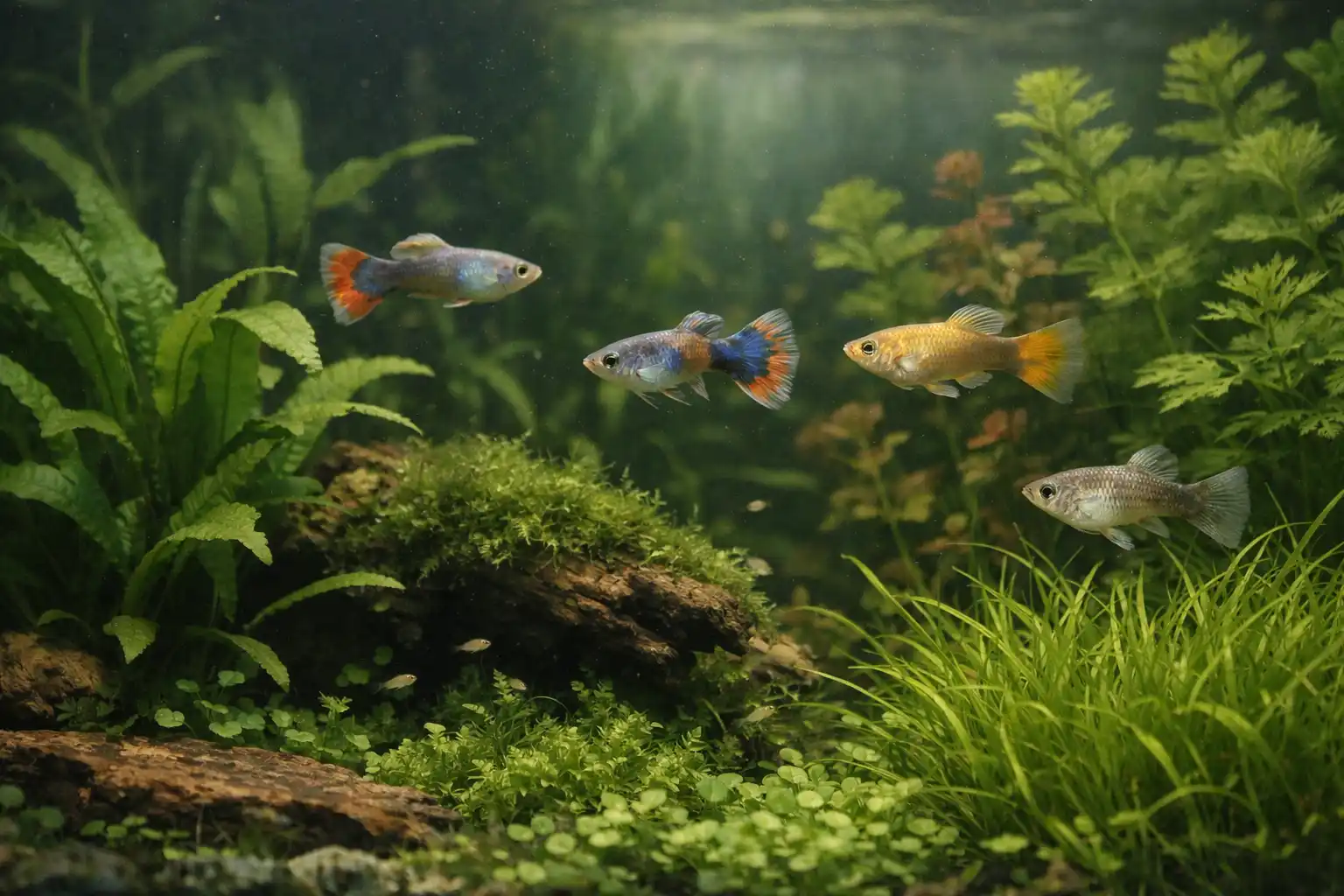
Breeding guppies feels harmless at first.
It starts accidentally.
A few babies appear in the plants.
You feel a small spark of pride.
“Life is happening in my tank.”
But there’s a point — usually subtle — where breeding stops being nature
and starts becoming pressure.
Most people don’t notice that line until they’ve crossed it.
Breeding Isn’t Neutral
In the wild, guppies breed constantly because nature removes the weak.
Predators eat the slow ones.
Disease takes the fragile ones.
Only the strongest pass on genes.
In an aquarium, we remove that filter.
Every baby survives.
Every weak gene stays.
Every generation gets softer.
Breeding doesn’t just create life.
It locks in responsibility.
The First Warning Sign: Female Burnout
This shows up before anything else.
Females that:
- Are always pregnant
- Never regain body shape
- Hide more than they used to
- Die suddenly after “looking fine”
This isn’t bad care.
It’s reproductive exhaustion.
A female guppy isn’t designed to give birth endlessly in a closed system with no rest cycle.
When females start dying before males — breeding has already gone too far.
The Second Warning Sign: Babies You Don’t Want
At some point, you stop feeling joy when fry appear.
You feel stress instead.
Where will they go?
Who will take them?
Do you separate them… or let them disappear?
This emotional shift matters.
When babies feel like a burden, not a gift, breeding has lost its meaning.
The Third Warning Sign: Quality Drops Quietly
Early batches look good.
Later batches:
- Grow unevenly
- Have bent spines
- Show duller colors
- Die young for no clear reason
This is genetic fatigue.
Without introducing new blood or culling weak lines, you’re not breeding — you’re copying mistakes.
“But Isn’t Letting Nature Cull Cruel?”
This is uncomfortable, but important.
In aquariums, not every fry needs to survive.
Allowing adults to eat some fry is not cruelty.
It’s balance.
What is cruel:
- Raising hundreds of weak fish
- Selling poor-quality stock
- Passing genetic problems to others
Ethical fishkeeping sometimes means allowing loss — not preventing it.
There Is No Shame in Stopping
Stopping breeding doesn’t mean failure.
It means maturity.
Many experienced hobbyists reach a point where they:
- Separate sexes
- Keep female-only tanks
- Maintain a stable display
- Focus on health, not production
They stop chasing “more”
and start valuing “enough.”
Ask Yourself This One Question
Before allowing another generation, ask:
“Am I improving this line — or just multiplying it?”
If the answer feels unclear, it’s time to pause.
A Different Definition of Success
Success in guppy keeping isn’t measured by:
- How many babies you produce
- How fast they grow
- How colorful they are
It’s measured by:
- How calm the tank feels
- How long fish live
- How little intervention is needed
Sometimes, the most responsible breeder is the one who chooses not to breed.
Closing Thought
Guppies will always want to reproduce.
But you don’t have to let them — endlessly.
There is wisdom in stopping.
There is care in restraint.
And there is kindness in knowing when enough life is already enough.