You spent RM200 on a tank, filter, and beautiful fish. But then you feed them the cheapest RM2 bag of bright red pellets from the pasar malam.
Think about it: Would you feed your cat nothing but cream crackers every day? No. So why do we do it to our fish?
Feeding your fish high-quality food isn’t just about them getting fat. Good food means brighter colors, less sickness, and—most importantly—less poop to clog up your filter.
In Malaysia, we have dozens of brands. Some are excellent, and some are basically flavored sawdust. Today, we’re reviewing the best (and worst) fish food brands you can find on local shelves.
The Great Debate: Pellets vs. Flakes
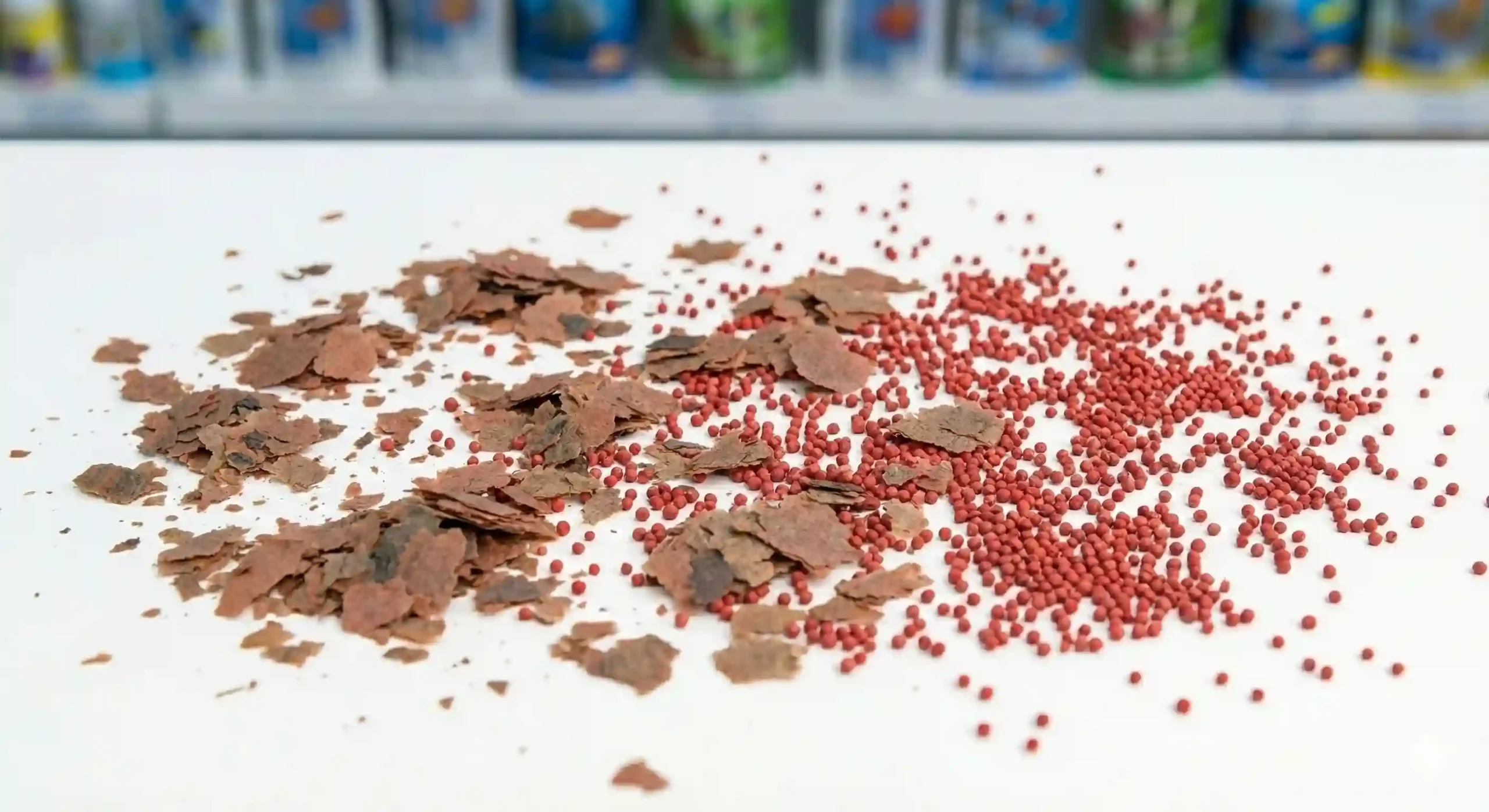
Before we talk brands, you need to choose the type of food.
1. Flakes (Kepingan)
These are the colorful, paper-thin crisps that float on top.
- Pros: Great for small fish with tiny mouths (Guppies, Tetras). They are easy to crush with your fingers.
- The Malaysian Problem: Our weather is unbelievably humid. Once you open a tub of flakes, the humidity gets in, and they can turn into a soggy, moldy clump within a month if not sealed perfectly.
2. Pellets (Butiran)
Small, hard balls that either float or sink.
- Pros: Denser nutrition. They don’t mess up the water as easily if left uneaten. They handle Malaysia’s humidity much better.
- Cons: You must buy the right size. A small Neon Tetra cannot eat a large Goldfish pellet.
My Verdict: For most Malaysian fish keepers, Micro-Pellets are better than flakes. They stay fresh longer and are cleaner.
Brand Review: What’s Good in Malaysian Shops?
We tested three common categories of food you’ll find at CTY or your neighborhood LFS.
The Premium King: Hikari (Japan)
If you have the budget, just buy Hikari. It is widely considered the gold standard globally.
- Why it’s good: Look at the ingredients label. The first item is usually “Fish Meal” or “Krill Meal,” not filler like wheat flour. Their “Micro Wafers” or “Vibra Bites” (which look like bloodworms) are fantastic for community tanks.
- Price: Expensive (RM25+ for a small pack), but your fish will look stunning.
The Reliable Mid-Range: Tetra (Germany)
You will see the yellow TetraMin tubs everywhere. This is the “Honda City” of fish food—reliable and gets the job done.
- Why it’s good: It’s a balanced diet. It’s not as protein-rich as Hikari, but it’s perfectly fine for everyday community fish like Mollies and Platys. Their flakes are famously good, but mind the humidity!
- Price: Moderate (RM15 – RM20).
The Budget “Cap Ayam”: Local Generic Brands
These are the clear plastic bags with a simple stapled paper label, often sold for RM2 – RM5.
- The Truth: Read the label (if there is one). They are often mostly wheat, corn, and food coloring with very little actual fish protein.
- Are they bad? Not necessarily “bad,” but they are junk food. Your fish will survive, but their colors won’t pop, and they will produce a lot of waste because they can’t digest the fillers. Use these only if you are on an extreme budget for very hardy fish.
One Simple Trick to Read a Label
Don’t get tricked by pretty pictures of colorful fish on the bag. Look at the first 3 ingredients.
- Good Signs: Whole Fish Meal, Krill, Shrimp Meal, Spirulina.
- Bad Signs: Wheat flour, Corn starch, Soybean meal listed first. (Fish are not cows; they don’t naturally eat corn!).
Conclusion
If you can afford it, upgrade from the generic RM2 bag to a small tub of Tetra or Hikari micro-pellets. It costs less than a fast-food meal, and one tub will last you 3-6 months. Your fish’s colors will thank you!
What brand are you currently feeding? Let me know in the comments!