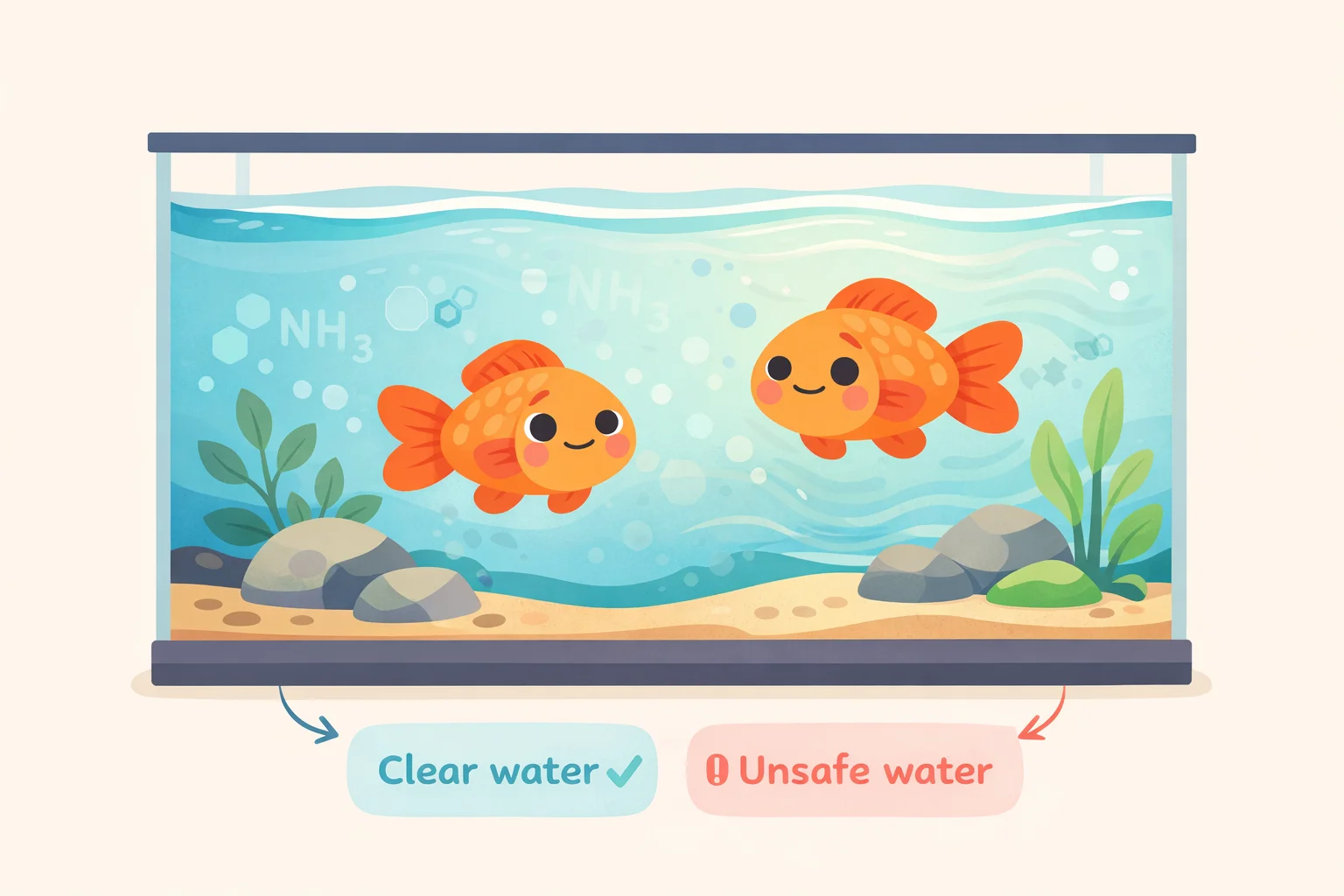
When fish die in a brand-new tank, most beginners look for something obvious.
Disease.
Aggression.
Bad fish from the shop.
But the thing that kills most fish in new aquariums doesn’t look like anything at all.
The water can be crystal clear.
The fish can be eating.
The tank can look “clean”.
And yet, something invisible is slowly burning your fish from the inside.
That silent killer is ammonia.
Why New Tanks Feel Safe (But Aren’t)
A new aquarium feels fresh.
- New filter
- New gravel
- Clean glass
- Clear water
So naturally, beginners assume: this must be the safest stage.
In reality, it’s the most dangerous stage of a tank’s life.
That’s because a tank doesn’t become safe when it looks clean.
It becomes safe when it becomes alive.
And new tanks aren’t alive yet.
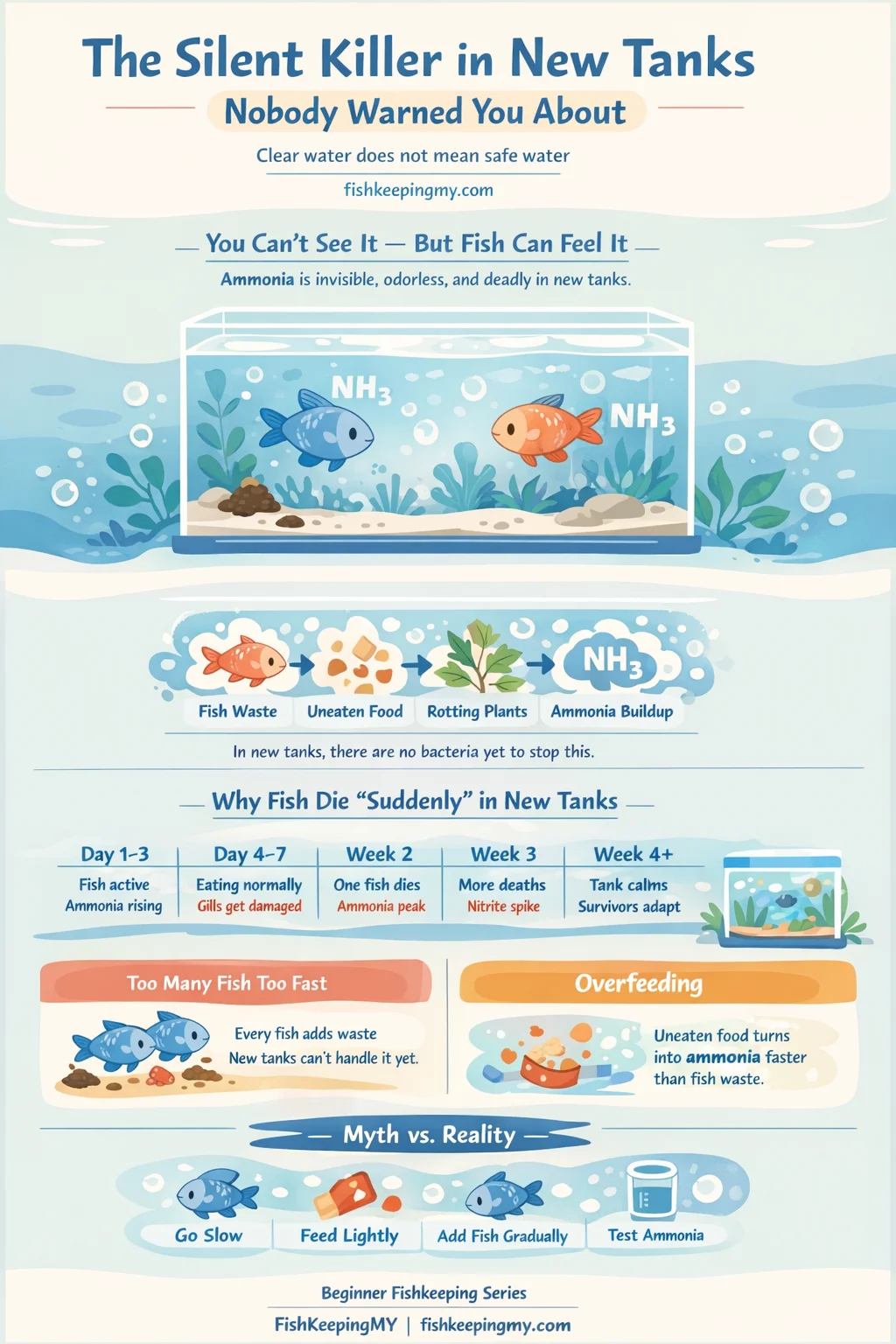
What the Silent Killer Actually Is
Fish produce waste constantly.
Uneaten food breaks down.
Dead plant bits rot.
All of that turns into ammonia.
Ammonia is:
- Colorless
- Odorless
- Invisible
But to fish, it’s corrosive.
It burns gills.
Damages organs.
Prevents oxygen absorption.
Fish don’t drown in ammonia — they suffocate slowly.
“But My Water Was Clear”
Clear water only tells you one thing:
You can see through it.
It does not tell you:
- If ammonia is present
- If bacteria exist
- If the tank is biologically stable
This is why beginners say:
“My parameters were fine… then everything died.”
Most beginners never tested ammonia — or didn’t test often enough to catch the spike.
The New Tank Timeline Nobody Explains
Here’s what usually happens in a new aquarium:
|
Time |
What You See |
What’s Actually Happening |
|
Day 1–3 |
Fish active |
Ammonia starts rising |
|
Day 4–7 |
Fish eating |
Gills under chemical stress |
|
Week 2 |
One fish dies |
Ammonia peak hits |
|
Week 3 |
More deaths |
Nitrite follows |
|
Week 4+ |
Tank “stabilizes” |
Survivors adapt |
By the time fish start dying, the damage already happened days earlier.
The Two Biggest Beginner Traps
1. Adding Too Many Fish Too Fast
Every fish adds waste.
More waste = more ammonia.
New tanks don’t have bacteria yet to process it.
So even “peaceful” fish die quietly.
2. Overfeeding in a New Tank
Food feels harmless.
But uneaten food decomposes into ammonia faster than fish waste.
In new tanks:
- One extra pinch of food
- One skipped siphon
- One dead plant leaf
That’s sometimes enough to push ammonia into lethal range.
Why Fish Don’t Die All at Once
This confuses people.
If ammonia is deadly, why doesn’t everything die immediately?
Because:
- Stronger fish survive longer
- Smaller fish fail first
- Some species tolerate stress better
So deaths look random.
They aren’t.
They’re staggered.
Filters Don’t Save Fish — Bacteria Do
This part upsets people, but it matters.
A filter:
- Moves water
- Traps debris
That’s it.
The real protection comes from beneficial bacteria living on:
- Filter media
- Gravel
- Glass
- Decorations
In a new tank, those bacteria don’t exist yet.
No bacteria = no protection.
The Truth Nobody Likes Hearing
Most fish deaths in new tanks are not:
- Bad luck
- Bad shops
- Weak fish
They are the cost of a tank that wasn’t ready.
Not dirty.
Not ugly.
Considered ready too early.
How People Accidentally Make It Worse
- Panic water changes that reset bacteria
- Deep cleaning filters too soon
- Adding “just one more fish”
- Feeding more because fish “look hungry”
All good intentions.
All deadly in a young tank.
The Real Beginner Advantage
Here’s the good news.
Once you understand this silent killer:
- Fishkeeping gets calmer
- Deaths stop feeling random
- Patience starts paying off
A mature tank forgives mistakes.
A new tank doesn’t.
Final Thought
If shock is the sudden killer,
ammonia is the slow one.
It doesn’t announce itself.
It doesn’t look dramatic.
It just waits quietly until the tank catches up — or the fish don’t.