We all know the story. You buy a Clownfish (“Nemo”). Now your kids, your spouse, or your own heart is telling you: “We need Dory!”
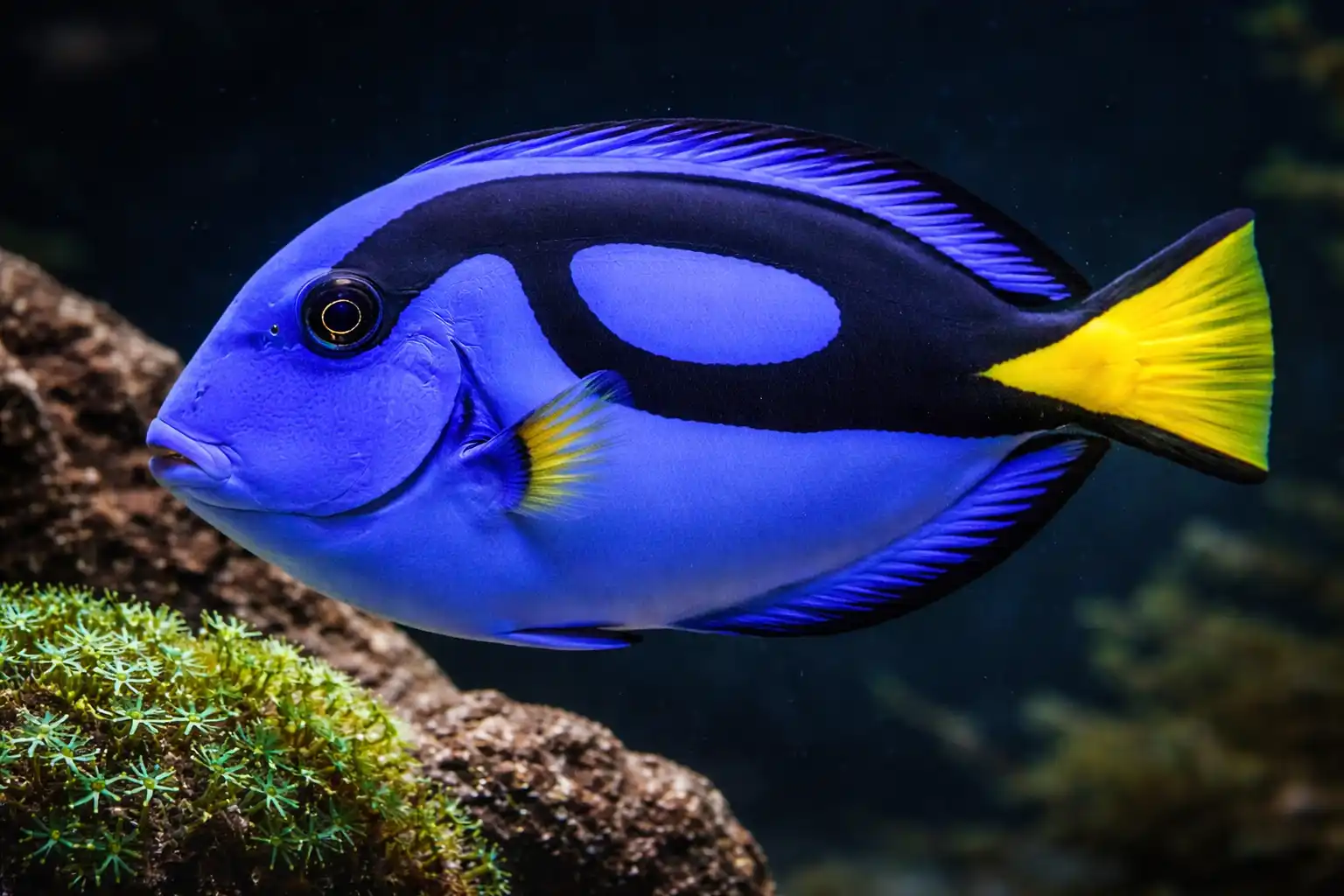
The Blue Tang (Paracanthurus hepatus), also known as the Palette Surgeonfish, is iconic. That deep royal blue body and bright yellow tail is stunning.
But here is the hard truth that fish shops might not tell you: “Dory” is much harder to keep than “Nemo.”
While Clownfish are hardy and stay small, Blue Tangs are disease magnets that grow huge. Here is what you need to know before you buy one.
1. The “Ich Magnet” (White Spot King)
If there is a parasite in your tank, the Blue Tang will catch it first.
Unlike Clownfish, Tangs have a very thin “slime coat” (mucus layer) on their skin. This makes them incredibly susceptible to Marine Ich (White Spot) and Velvet.
- The Reality: Many veterans call them “Ich Magnets.” If the temperature fluctuates or they get stressed, they will break out in spots.
- The Fix: You essentially need a UV Sterilizer (which we wrote about earlier!) and a stable, mature tank to keep a Blue Tang alive long-term.
2. They Are Swimmers (The Tank Size Issue)
In the movie, Dory is small. In reality, a Blue Tang grows to 12 inches (30cm).
But size isn’t the only issue—it’s speed.
Tangs are “open water swimmers.” They don’t hover like Lionfish. They zoom back and forth all day.
- The Rule: A 2-foot or 3-foot tank is too small. You need a minimum of a 4-foot (120cm) or ideally a 6-foot tank. Putting a Blue Tang in a small cube is cruel and causes stress (which leads to Ich).
3. The “Surgeon” Scalpel
They are called “Surgeonfish” for a reason.
Look closely at the base of their tail. There is a sharp, retractable spine that acts like a scalpel.
- The Danger: If they are scared or fighting, they will slash with their tail. If you are cleaning the tank and try to catch them with your hand, you can get a nasty cut. Always use a net or a container.
4. Diet: They Are Cows
Clownfish eat shrimp. Blue Tangs eat Salad.
They are primarily herbivores (plant eaters).
- The Diet: You cannot just feed them pellets. You need to feed them Nori (Dried Seaweed).
- The Clip: You should use a “veggie clip” to hold a sheet of seaweed in the tank so they can graze on it throughout the day. If they don’t get enough greens, their color will fade, and they will get Hole-in-the-Head disease (HLLE).
5. Behavior: The “Play Dead” Trick
This scares every new owner.
When a Blue Tang is stressed or sleeping, it often wedges itself into a rock crack and lies on its side.
It looks dead. It isn’t. It is just sleeping safely so the current doesn’t blow it away. Do not flush it!
The Bottom Line
The Blue Tang is one of the most beautiful fish in the ocean. But it requires a Big Tank, a UV Sterilizer, and a dedicated Veggie Diet.
If you have a standard 2-foot setup, stick to “Nemo.” Let “Dory” stay in the ocean (or the massive display tank at the fish shop).