Most fish swim away from danger.
Channa don’t.
They launch.
If you’ve kept Channa long enough, you’ve probably heard at least one horror story—
a sudden thud in the night, a lid slightly open, and a powerful fish lying on the floor the next morning.
This isn’t bad luck.
This is instinct.
Channa jumping is not panic behavior. It’s natural movement, and understanding why they do it is the difference between keeping a Channa alive… or losing one unexpectedly.
1. Jumping Is How Channa Move in the Wild
In nature, Channa live in unstable environments:
floodplains, shallow streams, drying ponds, and muddy forest pools.
When water conditions get bad, they don’t wait.
They jump from puddle to puddle, using explosive muscle power and their ability to breathe air. What looks like “escaping the tank” is actually the fish doing exactly what evolution trained it to do.
Your aquarium is just another pond to them.
2. They Don’t Jump Away — They Jump Toward
Many people assume Channa jump because they’re scared.
In reality, they often jump because they are curious.
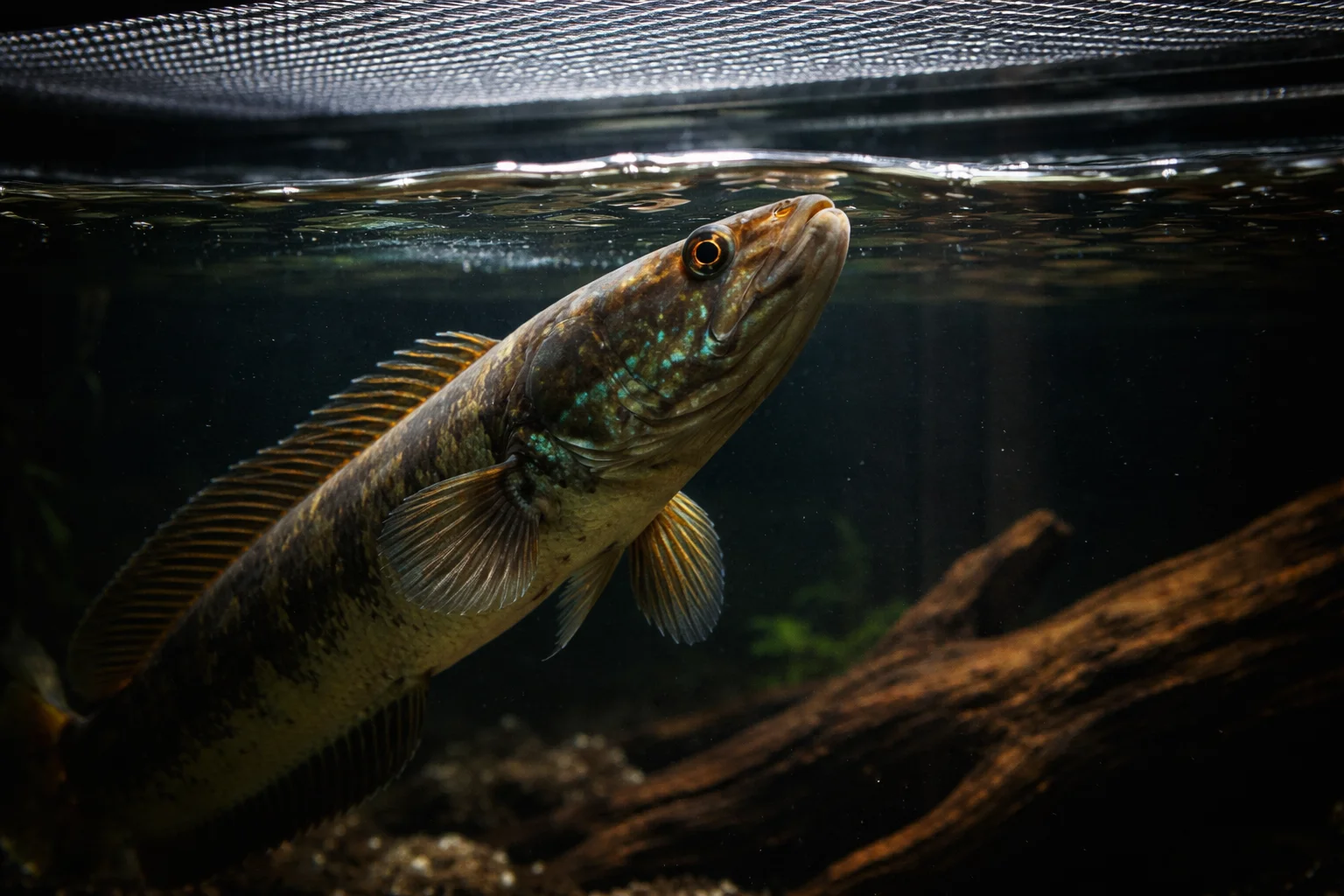
Channa track movement above the water.
Light, shadows, fingers, feeding time—anything happening outside the tank is interesting to them.
When they jump, they are not fleeing.
They are investigating.
This is why Channa often jump straight up through feeding holes or gaps near the front glass.
3. Poor Airflow Makes It Worse
Channa are air-breathers.
They need access to oxygen-rich air above the surface.
A tightly sealed glass lid traps warm, stale air. Over time, this can make the fish restless and uncomfortable, increasing the urge to jump.
Ironically, the tanks that look the most “secure” are often the most dangerous.
4. Stress Triggers the First Attempt
Most Channa don’t jump on day one.
They jump after something changes:
- A large water change
- Tank rearrangement
- Sudden lighting changes
- New surroundings after purchase
Once a Channa successfully jumps once, it learns something important:
“This works.”
From that point on, the fish is officially a repeat offender.
5. Why Small Gaps Are the Most Dangerous
Channa don’t need an open tank.
They only need:
- A feeding hole
- A loose cable gap
- A corner not fully covered
They aim with surprising accuracy. Many losses happen in tanks that are “mostly covered.”
Mostly is not enough.
Closing Thought
Channa are not clumsy jumpers.
They are precision launchers.
If you keep one, you are not just keeping a fish—you are keeping an animal that can:
- Breathe air
- Track movement
- Propel itself vertically
A Channa tank isn’t about decoration.
It’s about containment without suffocation.
Secure, breathable, and gap-free—that’s the difference between a beautiful predator and a tragic story.