Your fish was swimming fine yesterday.
Eating. Exploring. Looking… normal.
Then today — gone.
No white spots. No fungus. No obvious injuries.
So you assume the usual answer: disease.
But here’s the uncomfortable truth most fishkeepers learn too late:
Your fish probably didn’t die of disease.
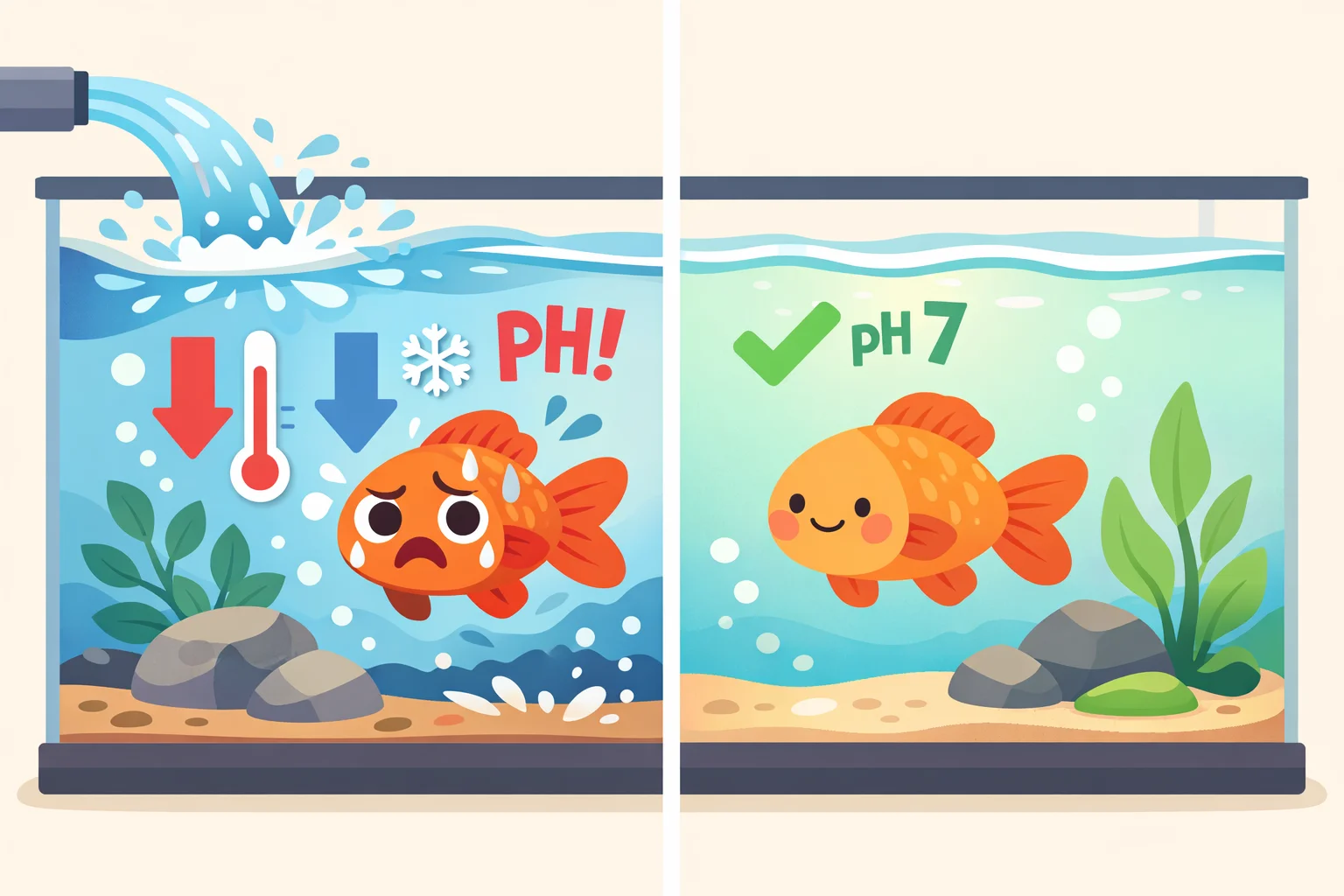
It died of shock.
And shock is sneaky. It doesn’t always kill instantly. Sometimes it waits a few hours. Sometimes a few days. Long enough to make you blame the wrong thing.
The Big Lie: “If It Was Shock, It Would Die Immediately”
Shock doesn’t work like a switch.
It works like stress overload.
Fish can survive a sudden change for a while — breathing harder, burning energy, pushing their bodies to adapt. When they finally give up, it looks random. Sudden. Unfair.
That’s why so many beginners say:
“My fish was fine for two days, then suddenly died.”
That delay is exactly why shock gets misdiagnosed as disease.
What “Shock” Actually Means (Simple Version)
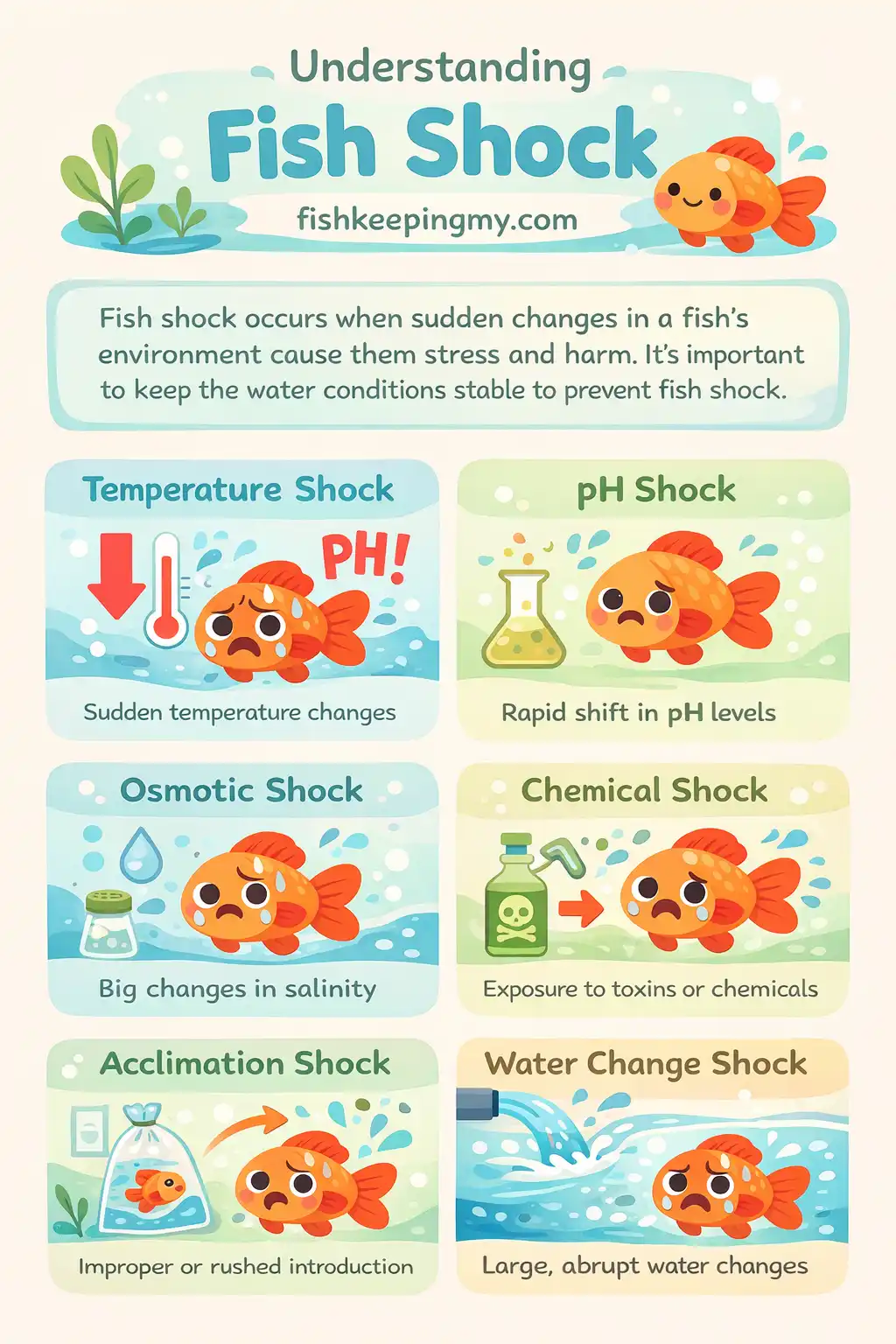
Shock happens when water changes faster than a fish’s body can adjust.
Fish don’t regulate internally like mammals. Their gills, skin, and organs react directly to the water around them. When things change too fast, their system collapses.
Here are the most common types beginners accidentally cause:
Common Types of Fish Shock
|
Shock Type |
What Changed Too Fast |
Typical Beginner Mistake |
|
Temperature shock |
Water temperature |
Big water change with cold/hot tap water |
|
pH shock |
Acidity / alkalinity |
Moving fish without proper acclimation |
|
Osmotic shock |
Mineral / TDS levels |
Sudden water changes, different source water |
|
Chemical shock |
Chlorine / chloramine |
Forgetting water conditioner |
|
Acclimation shock |
Everything at once |
Floating the bag and dumping the fish in |
None of these look dramatic at first.
That’s what makes them dangerous.
“But I Floated the Bag…”
Floating the bag only fixes temperature.
It does nothing for:
- pH
- hardness
- dissolved solids
- chemical differences
If the shop water is pH 6.5 and your tank is pH 8.0, floating the bag just warms the fish up before shocking it anyway.
That’s not acclimation.
That’s a polite execution.
The Water Change Trap
This one hurts, because it feels responsible.
You notice:
- Dirty glass
- Mulm on the substrate
- Cloudy water
So you do a big water change. Maybe even a deep clean.
To you, the tank looks healthier.
To the fish, the world just changed instantly:
- Temperature
- Chemistry
- Bacteria balance
- Oxygen levels
Sometimes they die that night.
Sometimes they struggle quietly… then die days later.
And you never connect it to the water change.
Why Shock Kills After the Event
Shock damages:
- Gills (breathing becomes inefficient)
- Osmoregulation (salt and water balance)
- Immune response
The fish may:
- Eat less
- Hide more
- Clamp fins
- Look “okay” but act slightly off
Then one morning, it’s gone.
Not because disease suddenly appeared — but because the body couldn’t recover.
The Hard Truth Nobody Warns You About
Most beginner fish deaths are not caused by:
- Parasites
- Fungus
- Bad genetics
They’re caused by good intentions done too fast.
Fish don’t need perfect water.
They need predictable water.
The Rule That Saves Lives
If there’s one rule to remember, it’s this:
Slow changes rarely kill fish.
Fast changes often do.
Small water changes.
Slow acclimation.
Matching temperature.
Always dechlorinate.
That’s not being lazy.
That’s being kind.
Final Thought
If you’ve lost fish like this, don’t quit the hobby.
Almost every long-term fishkeeper has a “mystery death” phase — before realizing it wasn’t mystery at all. Just shock, misunderstood.
Once you stop rushing the water,
fishkeeping suddenly becomes… peaceful.