After a while in fishkeeping, something strange happens.
You stop panicking.
You stop scrubbing everything spotless.
You stop chasing perfect numbers.
And somehow… your fish live longer.
This is usually when people realize a truth nobody teaches beginners:
Fish don’t need perfect water.
They need stable water.
Why Beginners Obsess Over “Clean”
It makes sense.
Dirty glass feels wrong.
Mulm looks unhealthy.
Cloudy water feels like failure.
So beginners react the way humans always do — by fixing what they can see.
They clean.
They siphon.
They replace water aggressively.
They rinse filters until they look brand new.
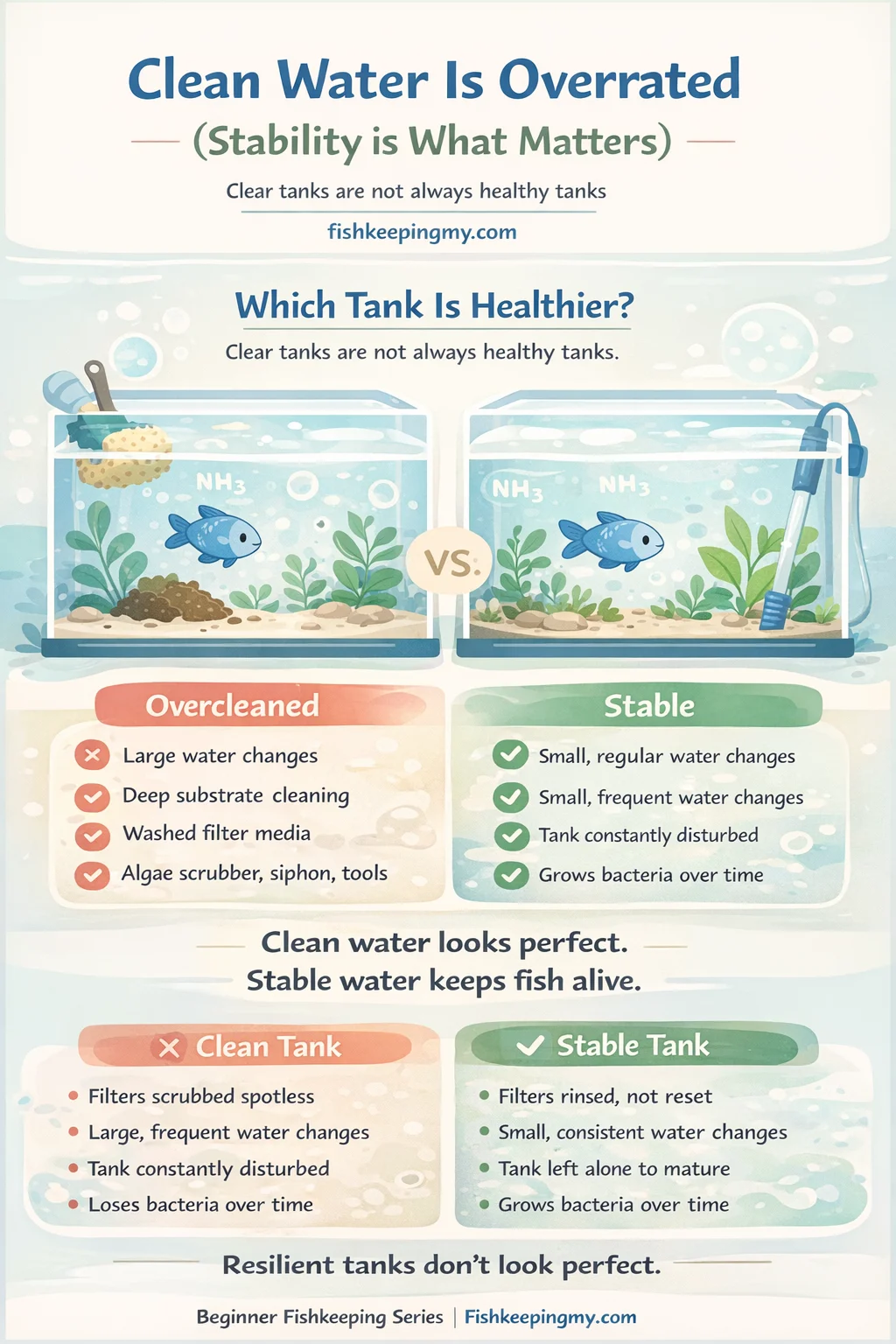
And without realizing it, they keep resetting the tank’s immune system.
What Fish Actually Care About
Fish evolved in environments that were:
- Not crystal clear
- Not perfectly balanced
- Not sterile
But they were predictable.
The temperature didn’t swing wildly.
The chemistry didn’t reset overnight.
The bacteria didn’t vanish every weekend.
Stability is safety.
The Difference Between Dirty and Mature
This is where many guides fail — they mix these two up.
❌ Dirty Water
- Excess waste
- Overfeeding
- Neglect
- Toxic buildup
✅ Mature Water
- Established bacteria
- Consistent chemistry
- Mild mulm
- Balanced ecosystem
A tank can look “less clean” and still be far healthier.
Why Over-Cleaning Kills Tanks Slowly
When you:
- Wash filter media under tap water
- Replace too much water at once
- Deep-clean substrate constantly
You remove:
- Beneficial bacteria
- Biological stability
- The tank’s shock absorbers
The tank doesn’t crash immediately.
It becomes fragile.
The next small mistake — feeding a bit extra, adding one fish — suddenly becomes deadly.
Old Tanks Forgive. New Tanks Don’t.
This is why experienced fishkeepers seem “lucky”.
They forget to do water changes.
They miss a feeding.
They add a fish impulsively.
And nothing dies.
It’s not luck.
It’s stability built over time.
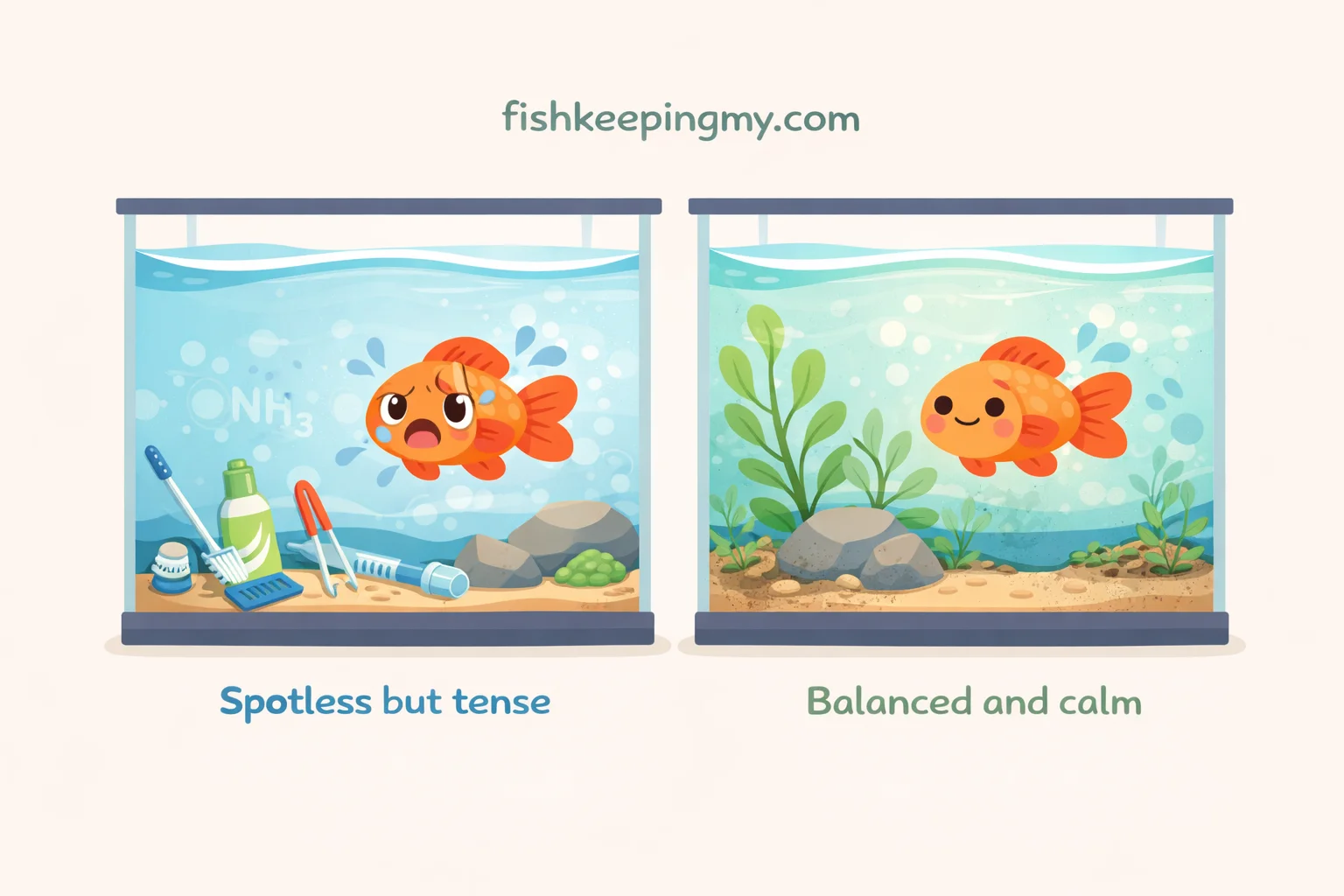
The Clean Tank Illusion
A spotless tank can actually be:
- Biologically empty
- Easily shocked
- Extremely unforgiving
While a slightly “lived-in” tank:
- Buffers mistakes
- Handles waste naturally
- Protects fish silently
Clean is visual.
Stable is invisible.
The Mental Shift That Changes Everything
The moment fishkeeping gets easier is when you stop asking:
“How do I make this tank cleaner?”
And start asking:
“How do I disturb this tank less?”
That shift alone saves more fish than any product ever will.
What Stability Looks Like in Practice
Not rules — habits:
- Smaller, regular water changes
- Gentle filter cleaning (in tank water)
- Feeding less than feels right
- Adding fish slowly
- Letting tanks age
None of this is exciting.
That’s why it works.
The End of the Trilogy (The Big Picture)
- Blog 1: Fast changes kill fish (Shock)
- Blog 2: Invisible toxins kill fish (Ammonia)
- Blog 3: Stability keeps fish alive
Fishkeeping isn’t about control.
It’s about restraint.
Final Thought
A calm tank makes calm fish.
And a calm fishkeeper makes fewer mistakes.
That’s the real secret nobody sells — because patience doesn’t come in a bottle.