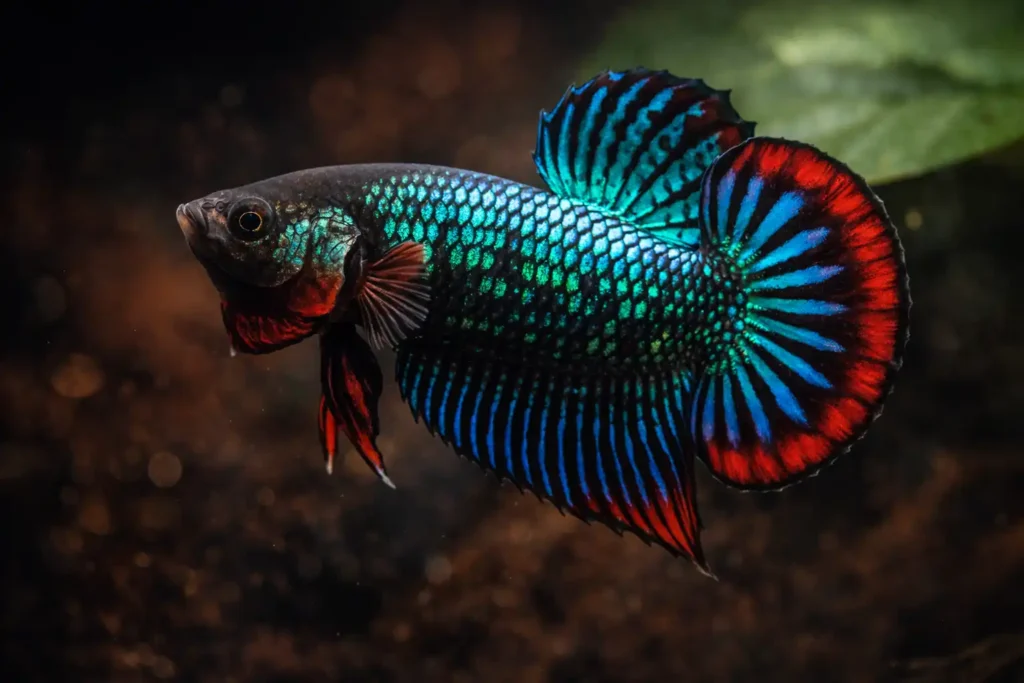
We all love the look of a “Super Red Halfmoon” or a “Dragon Scale Plakat.” They are stunning. They look like swimming paintings.
But have you ever noticed what happens when they get old?
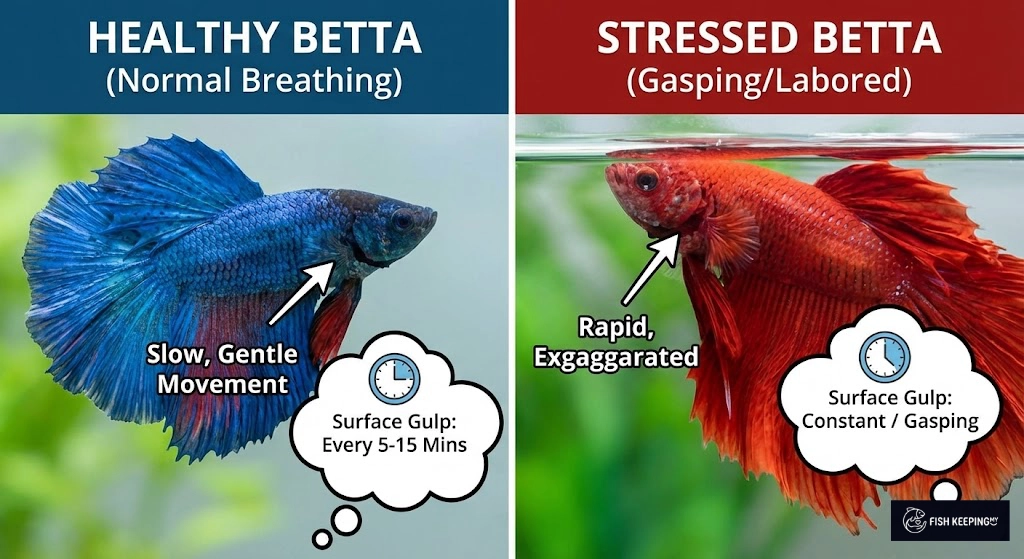
By the time a fancy Betta is 1.5 or 2 years old, he often spends most of his time resting on the bottom. He struggles to swim to the surface. He gets lumps. He might even go blind.
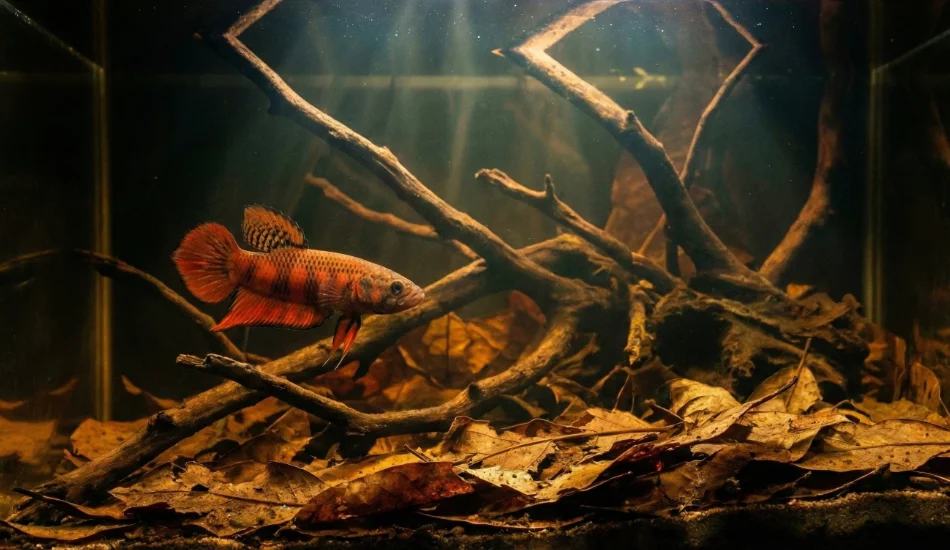
Meanwhile, the humble Betta Imbellis (Wild Betta) you caught in a drain might live for 4 or 5 years, darting around the tank until his final days.
This isn’t a coincidence. It is genetics. Here is the hidden cost of “Beauty” in the Betta world.
1. The “Wedding Dress” Effect (Rosetails & Halfmoons)
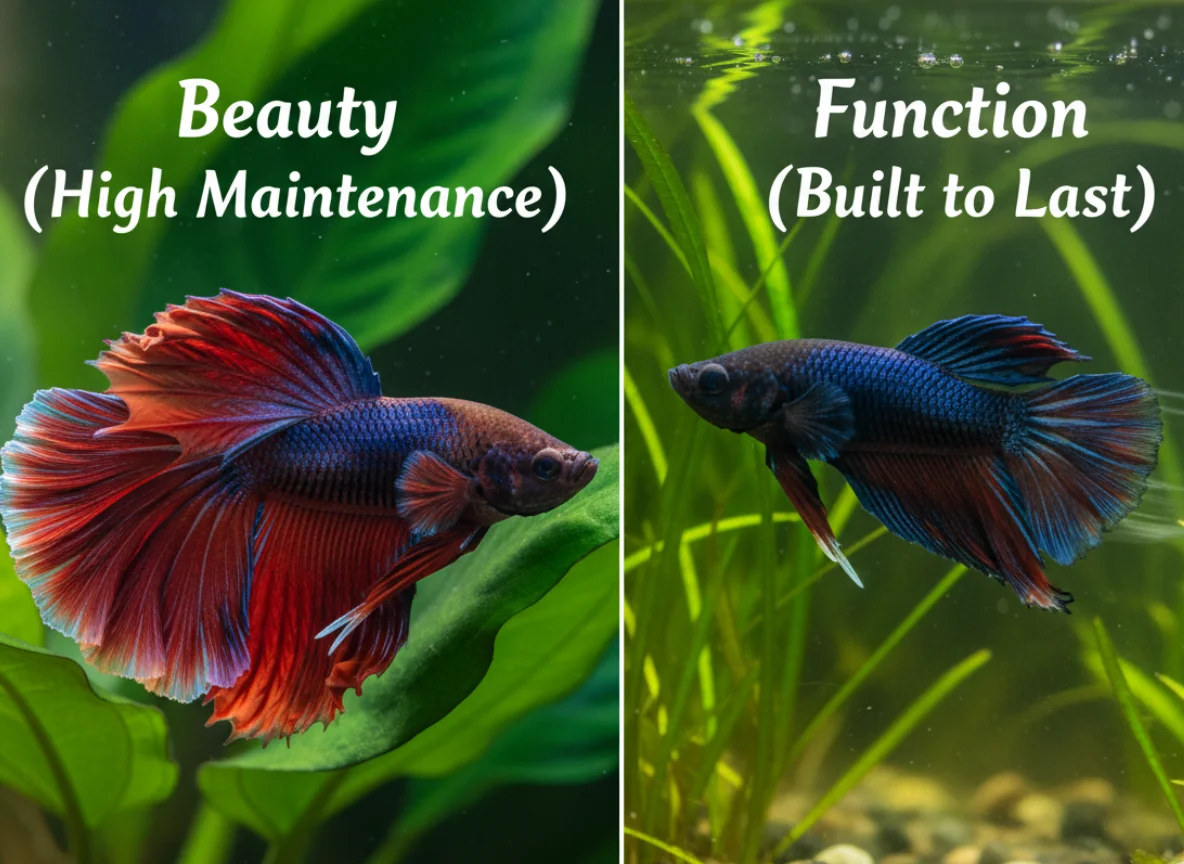
Imagine trying to go for a jog while wearing a heavy, wet wedding dress. That is what life is like for a long-finned Halfmoon or Rosetail Betta.
- The Youth: When they are young (3-6 months), their muscles are strong enough to carry the fins. They flare beautifully.
- The Age: As they age, their muscles weaken, but the fins keep growing. Dragging that weight around becomes exhausting.
- The Result: They become inactive. They lay on leaves. This lack of movement slows down their digestion and metabolism, leading to a shorter lifespan.
2. The “Diamond Eye” (Dragon Scales)
In Malaysia, “Dragon Scale” Bettas (thick, metallic white scales) are very popular.
But this thick scaling comes with a defect.
- The Condition: The scales don’t stop growing. They often grow over the fish’s eye. This is called Diamond Eye.
- The Result: The fish goes blind. He can’t find food. He bumps into glass. While a blind Betta can live a full life if you hand-feed him, it is a sad genetic flaw that Wild Bettas rarely face.
3. The “Marble” Curse (Tumors)
We love “Marble” or “Koi” Bettas because they change color. It’s exciting.
But the gene that causes rapid color change (“jumping genes”) is unstable.
- The Risk: This instability often leads to the growth of tumors or lumps on the fish’s side.
- The Reality: Most tumors are benign (not cancer), but they look ugly and can press against internal organs. There is no cure.
4. Why Wild Types Win
Wild Bettas (Imbellis, Mahachai, Smaragdina) haven’t been bred for “Excess.”
- Short Fins: They are Plakats. They are hydro-dynamic. They can swim fast and effortlessly, keeping their hearts healthy.
- Clean Genes: They don’t have thick Dragon scales or unstable Marble genes.
- Survival: Evolution designed them to survive droughts and predators. Breeders designed Fancy Bettas to win a beauty contest in a jar.
The Bottom Line
I am not saying you shouldn’t buy Fancy Bettas. I own them, and I love them.
But when you buy a heavy-finned Rosetail, understand what you are signing up for. You are buying a fish that will need extra care as it ages.
- It will need lower water flow.
- It will need “resting leaves” near the surface.
- It might need hand-feeding.
If you want a fish that stays active, healthy, and “young” for years… go Wild.