There’s a type of guppy tank you almost never see on Instagram. It doesn’t win aquascaping contests. It doesn’t have crisp layouts or perfect symmetry. It wouldn’t look “aesthetic” under those expensive, bright white lights.
But months later—even years later— the fish are still alive. The water is rock solid. The owner is relaxed.
That’s the Lazy Guppy Tank.
It Starts by Letting Go of Control
Most guppy tanks in Malaysia fail because we kiasu (try too hard). We rearrange the rocks every week. We scrub the glass until it’s sterile. We chase “crystal clear” water like it’s a competition.
The lazy tank does the opposite. Once it’s set up, it’s mostly left alone. Not neglected—just not constantly “interfered” with.
Ugly Plants Are the Heroes
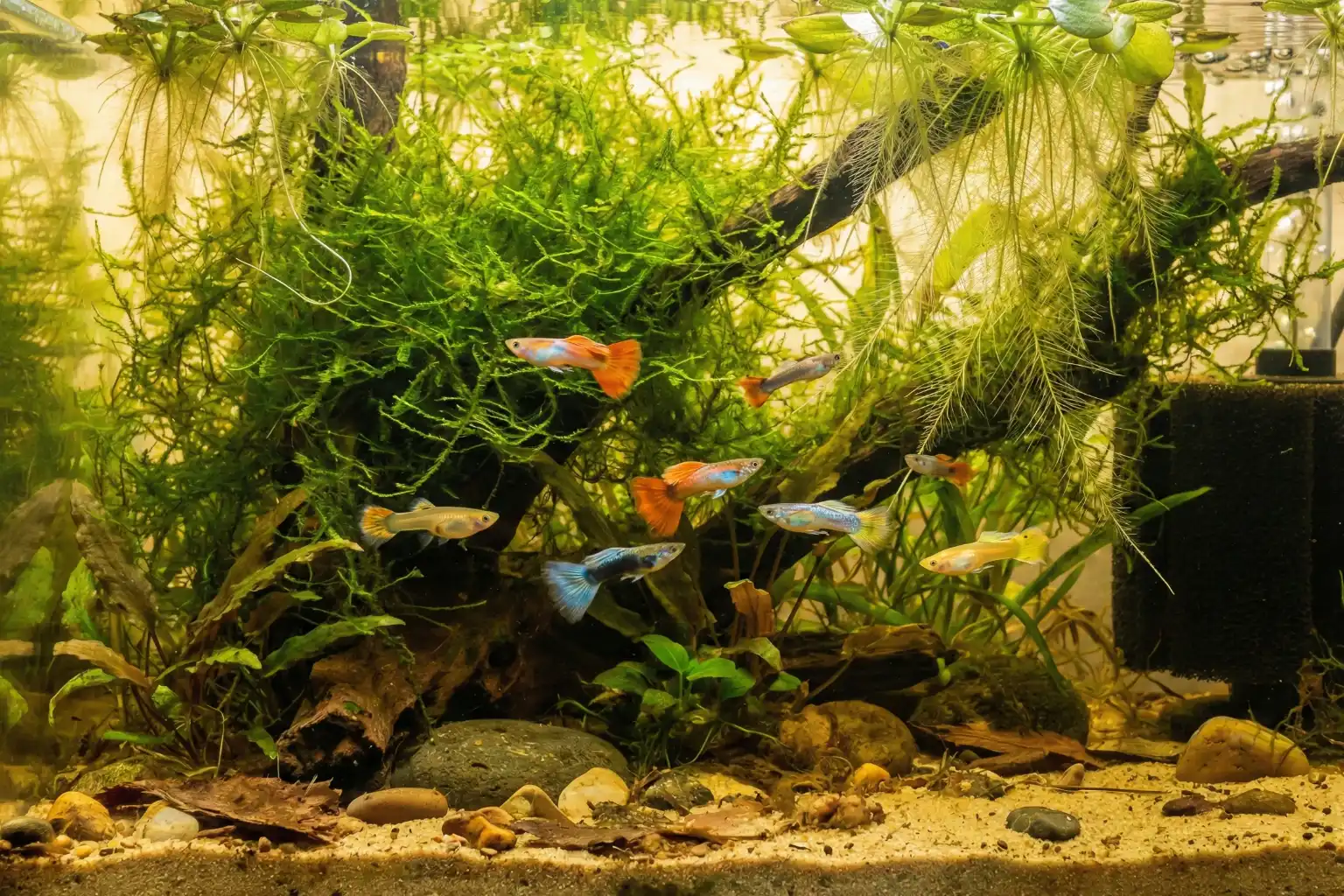
The lazy guppy tank is built around plants people love to hate. The messy ones. The fast ones. The ones you find for RM5 at the local shop.
Floating plants like Frogbit that block the light. Guppy Grass that grows sideways and tangles. Java Moss that refuses to stay where you tied it.
These plants are the real workers:
- They absorb waste (Nitrates) nonstop.
- They buffer water swings.
- They create “safe zones” for fry to hide.
They don’t look intentional. They look alive. And guppies thrive in that chaos.
Sponge Filters Beat Everything Else
There’s a reason you see sponge filters in every pro breeder’s room. They’re boring. They’re ugly. And they work.
In a lazy tank, we don’t need a RM300 canister filter. A sponge filter:
- Never sucks up newborn fry.
- Oxygenates the water constantly.
- Grows massive colonies of “good” bacteria.
- Fails gently, not catastrophically.
They don’t polish the water to look like a diamond. They stabilize it. Guppies don’t need crystal clarity. They need forgiveness.
Dirt, Mulm, and “Untidy” Substrates
In a lazy tank, the bottom is not spotless. There’s mulm (that brown “dust” on the floor). There’s debris. There’s life.
That mulm is a tiny ecosystem:
- It feeds the plants.
- It supports microfauna (tiny snacks for guppies).
- It acts as a nutrient buffer.
Vacuuming the gravel too aggressively is like hitting “Reset” on your tank’s brain. Lazy tanks clean lightly, not deeply.
Fewer Water Changes, Done Calmly
This surprises people. Lazy guppy tanks often need less intervention, not more. Why? Because the plants are handling the waste and the stocking is reasonable.
Water changes become:
- Smaller (10-20%).
- Slower.
- More consistent.
No emergency “save the tank” moments. No massive 80% water changes because you missed a week. Just steady maintenance.
Why Guppies Behave Better Here
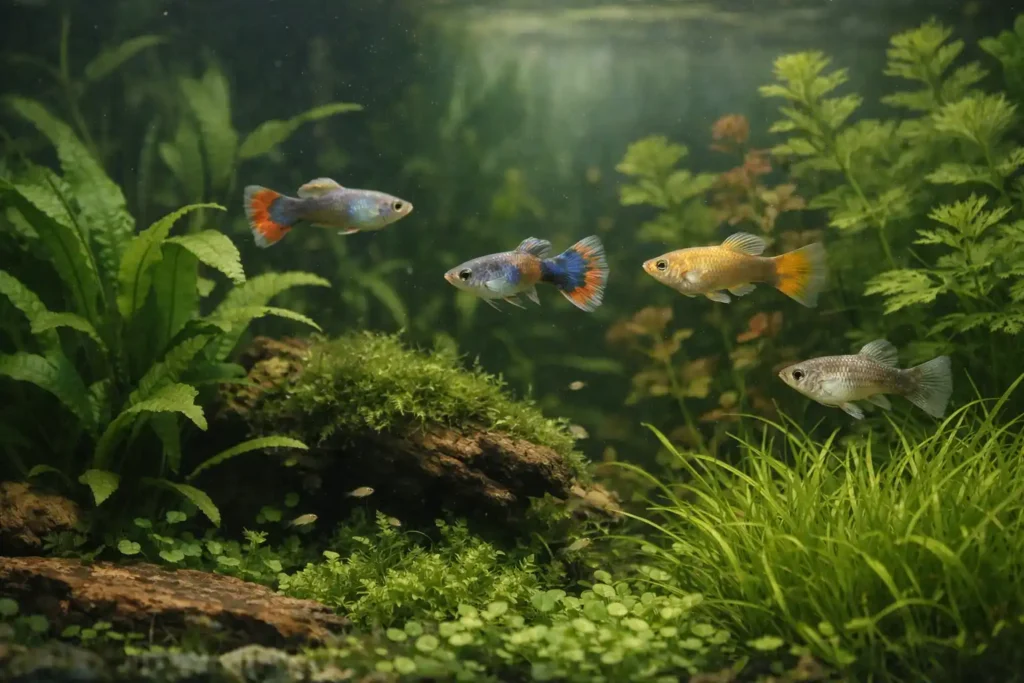
Watch guppies in a lazy, overgrown tank. They swim slower. They rest more. The males chase the females less aggressively because they can’t see them 24/7.
Stress drops because the environment absorbs it. The plants block lines of sight. The spaces allow a tired fish to retreat. The tank stops feeling like a glass box. It feels like a home.
It’s Not Lazy — It’s Mature
“Lazy” sounds careless. It’s not. It’s a tank designed to:
- Tolerate mistakes.
- Absorb change.
- Protect the fish from us.
The more experience I gain in this hobby, the simpler my tanks become. That’s not a coincidence.
When Lazy Tanks Fail
They do fail—but only when we break the basic rules:
- Overstocking (too many fish).
- Overfeeding (too much leftover “rubbish” in the water).
- Ignoring minerals (guppies still need hard water).
Lazy tanks still need intention. They just don’t need micromanagement.
A Different Kind of Beauty
At first glance, a lazy guppy tank looks messy. But over time, something changes. You stop watching the “layout” and you start watching the fish.
You notice the calm movement. The long lifespans. The fact that you haven’t lost a fish in six months.
And one day you realize: This tank doesn’t impress visitors. It rewards patience.
Bottom Line
A lazy guppy tank isn’t built for a 15-second TikTok. It’s built for time. And in fishkeeping, time is the hardest thing to maintain.