You love the aggression of the Snakehead (Channa). You love the personality of the Oscar. But you want something that looks like it came from another planet.
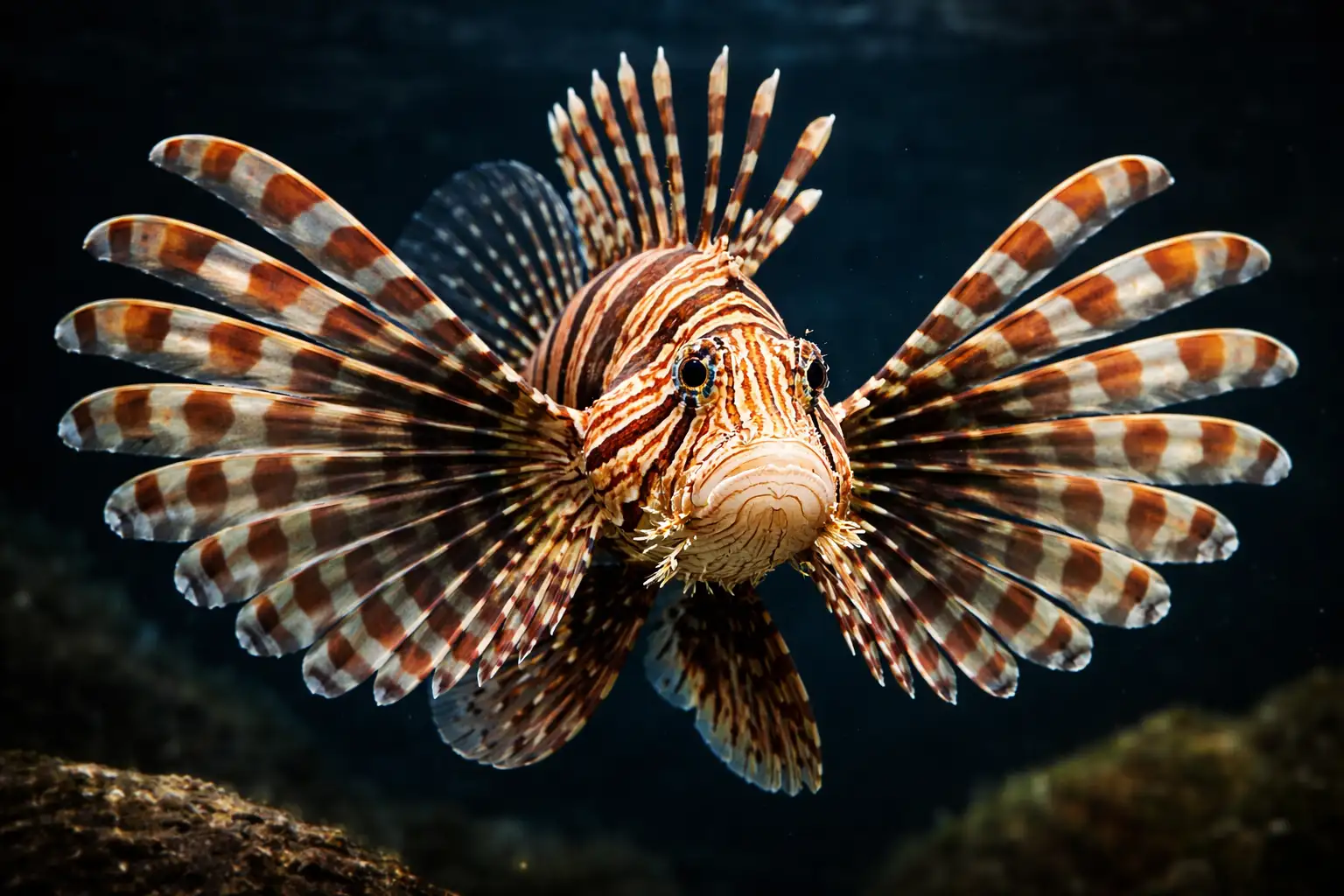
Enter the Lionfish (Pterois volitans).
With their long, flowing fins and tiger-like stripes, they are arguably the most recognizable fish in the ocean. They float in the water like a spaceship, waiting for prey.
But keeping one is not like keeping a Goldfish. They are venomous, they are gluttons, and they are one of the most exciting predators you can own. Here is how to keep the “King of the Reef” without getting stung.
1. The “Ambush” Hunter
Lionfish do not chase their food like a Toman. They hunt like a ninja.
They use their massive pectoral fins (side fins) to corner their prey against a rock. Then, SNAP. They open their mouth so fast that it creates a vacuum, sucking the prey in before it even knows what happened.
- The Feeding Show: This behavior makes them incredibly fun to watch during feeding time. They stalk their food with slow, deliberate movements.
2. The Venom Warning (Safety First)
We cannot talk about Lionfish without talking about the spines.
The long spikes on their back (dorsal fins) are venomous.
- Is it fatal? Rarely for healthy adults.
- Does it hurt? Yes. It has been described as “being hit by a hammer while being burned.”
- The Safety Rule: Never put your hands in the tank when you can’t see the fish. When cleaning the tank, always know exactly where the Lionfish is. They are not aggressive towards humans, but they won’t move out of your way.
3. Diet: The “Live Feed” Dilemma
In the wild, Lionfish eat anything that moves.
In the aquarium, getting them to eat dead food (frozen shrimp/silversides) is the hardest challenge.
- Stage 1: You will likely need to feed Live Ghost Shrimp or small feeder fish (Mollies) at first.
- Stage 2: You must “train” them. Use a feeding stick (tongs) to wiggle a piece of frozen shrimp near their face to mimic a live animal. Once they learn that “Tongs = Food,” they will eat anything.
4. Tank Mates: The “Mouth Rule”
Can Lionfish have friends? Yes, but the rule is simple: “If it fits in the mouth, it is food.”
- Bad Tank Mates: Clownfish, Damsels, Shrimp, Blennies. (Expensive snacks).
- Good Tank Mates: Snowflake Eels, large Tangs, Triggerfish, or Marine Bettas (Comet). Basically, anything too big to swallow and too tough to bully.
5. Tank Requirements
Despite their scary appearance, Lionfish are actually quite lazy. They don’t need a massive swimming space like a Tang.
- Tank Size: A standard 3-foot or 4-foot tank is sufficient for an adult Volitan Lionfish.
- Filtration: They are messy eaters (predators poop a lot). You need a strong Protein Skimmer (like the Skimz models sold at Macallum Ocean) to handle the bioload.
The Lionfish is the ultimate “Centerpiece Predator.” It commands respect. When guests walk into your house, they won’t look at the TV; they will stare at the venomous dragon floating in your tank.
Just remember: Buy a pair of long tongs. Do not hand-feed the dragon.